
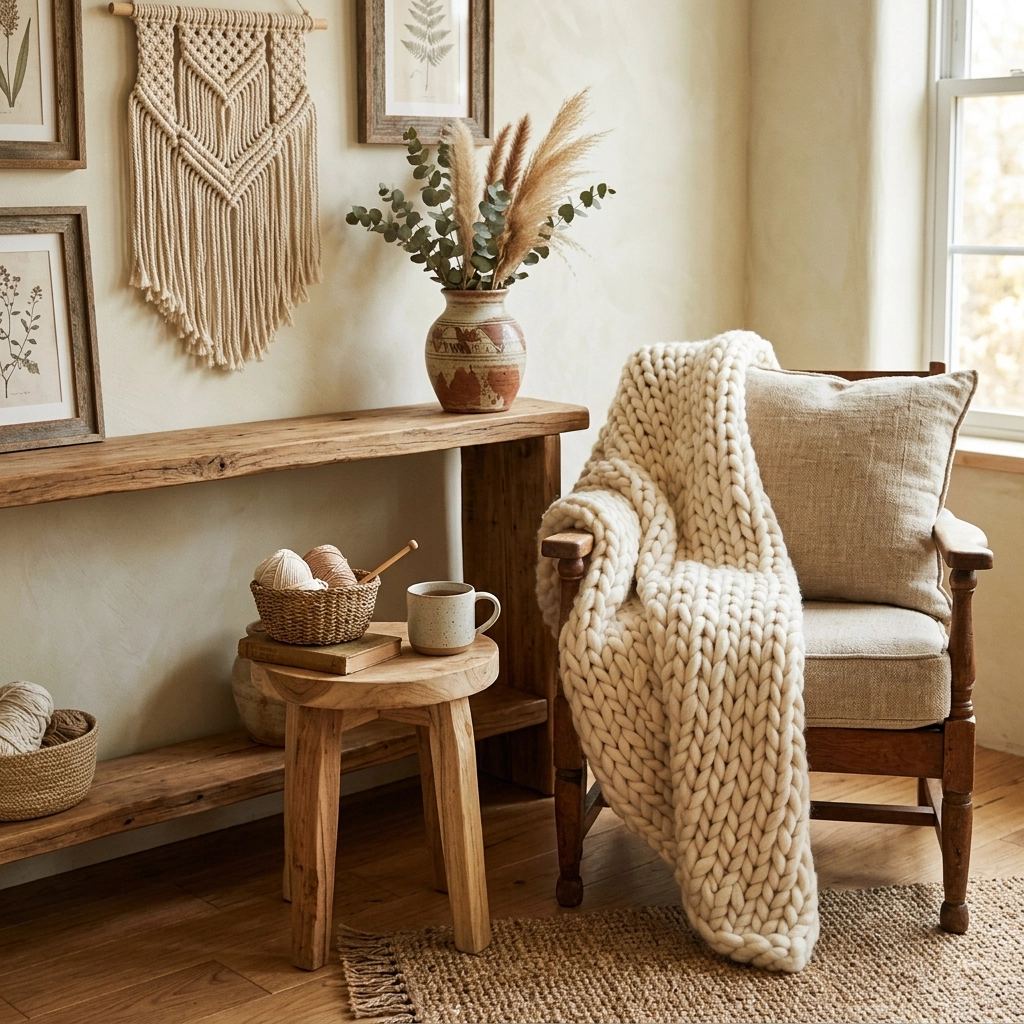

The Theoretical Foundation of Tactile Integration in Interior Design
The concept of tactile texture within the domestic sphere refers explicitly to the physical sensation experienced when an individual comes into direct contact with a surface or material. In the realm of interior design, particularly when curated with handcrafted elements, the integration of these textures is not merely an aesthetic choice but a multi-sensory necessity. Tactile texture, often defined as the haptic quality of an object, serves to ground a room, providing a sense of depth that purely visual patterns cannot achieve alone. When we discuss the integration of tactile textures with current handmade home decor, we are essentially discussing the methodology of layering different physical sensations to create a cohesive and inviting environment.
To understand how to integrate these textures, one must first recognize that handmade items already possess an inherent textural advantage. Because these items are created by hand, they often feature slight irregularities, varied grain patterns, and unique fiber densities that mass-produced items lack. This inherent texture provides a primary layer upon which further tactile elements can be built. By focusing on the physical experience of the home, homeowners can transform a sterile space into a rich, corporeal environment that resonates with the human need for sensory feedback. The physical experience of the home is, therefore, a direct result of the tactile textures chosen for the space.
The Symbiosis of Handcrafted Goods and Sensory Depth
The relationship between handcrafted goods and sensory depth is one of mutual reinforcement. A handcrafted item, such as a Flower Wall Hanging, introduces a specific three-dimensional quality to a vertical surface. When this item is integrated into a room, it creates a point of interest that invites the viewer to consider the material composition of the piece. This invitation to consider material composition is the first step in achieving sensory depth within a living space.
"The beauty of handmade items lies in their ability to bridge the gap between the functional and the emotional through their physical presence." - Michael
By selecting items that emphasize their construction, whether through visible brushstrokes in a Cow Painting or the weave of a Green Basket, the homeowner establishes a baseline of authenticity. This authenticity is further enhanced when secondary textures are introduced. For instance, placing a smooth, ceramic vase next to a rough, woven basket creates a juxtaposition that highlights the unique qualities of both materials. This juxtaposition is essential for creating a space that feels curated rather than merely decorated. The curation of a space, as opposed to the mere decoration of it, relies heavily on the thoughtful integration of contrasting tactile textures.

Methodologies for Contrasting Surface Modalities
When integrating tactile textures, it is imperative to employ a strategy of contrast. Surface modalities can be broadly categorized into several opposing pairs: rough versus smooth, soft versus hard, and matte versus glossy. To achieve a balanced interior, one must ensure that no single modality dominates the environment. If a room is filled exclusively with soft, plush textures, it may lack the definition required for visual clarity. Conversely, a room composed entirely of hard, smooth surfaces can feel cold and uninviting, lacking the warmth that human habitation requires.
Consider the application of these modalities in a living room setting. A handmade wooden coffee table provides a hard, natural surface with a specific grain texture. To integrate tactile textures effectively, one might place a Set of Three Books upon this table. The paper and binding of the books provide a different tactile experience than the wood of the table. By stacking these items, the homeowner creates a layered effect that appeals to both the eye and the hand. The layering of items, such as books on a wooden table, is a practical application of the methodology of contrasting surface modalities.
Furthermore, the introduction of textiles plays a critical role in this balancing act. A room featuring many hard surfaces, such as those found in Copper & Hazel Boutique's specialties, benefits immensely from the addition of soft goods. Linen, wool, and cotton are all excellent choices for introducing softness into a space that features wood, metal, or stone. By balancing the hard with the soft, the homeowner ensures that the space remains dynamic and responsive to the touch.
Strategic Implementation of Natural Fibers and Organic Materials
Natural fibers and organic materials are the cornerstones of effective tactile integration. Materials such as jute, rattan, seagrass, and unprocessed wool offer a level of texture that is difficult to replicate with synthetic alternatives. The use of a Green Basket (Large) is a prime example of how an organic material can serve both a functional and a textural purpose. The weave of the basket provides a rhythmic, repetitive texture that draws the eye and provides a satisfying haptic experience.

Incorporating these natural elements requires a focus on the organic origin of the materials. Organic materials possess a life-like quality that contributes to the overall "breathability" of a room's design. When one integrates a variety of natural fibers, one is essentially inviting the outdoors in, albeit in a controlled and refined manner. This invitation of the outdoors contributes to a sense of tranquility and groundedness. The sense of tranquility and groundedness is a direct psychological benefit of integrating natural, tactile textures into the home environment.
"Texture is the invisible language of home decor; it speaks to our subconscious longings for comfort and connection." - Sarah
Moreover, the repetitive use of certain textures can help to unify disparate handmade items. If several items in a room share a similar material or finish, such as the rustic metal found in a Bee Tin Sign, the space will feel more cohesive. This cohesion is vital when dealing with a diverse collection of handmade goods, as it prevents the room from feeling cluttered or disjointed.
The Role of Volumetric Lighting in Textural Perception
The perception of texture is inextricably linked to the presence and direction of light. Lighting serves as the medium through which texture is revealed to the human eye. Without proper lighting, even the most intricate tactile surfaces may appear flat and uninteresting. To highlight the textures of your handmade decor, one must consider the use of volumetric lighting, lighting that emphasizes the three-dimensional form and surface relief of objects.
Side-lighting, or grazing light, is particularly effective at emphasizing texture. When light hits a textured surface from an angle, it creates micro-shadows within the indentations and highlights on the elevations. This interplay of light and shadow is what allows the human brain to perceive depth and detail. For example, a Chicken Tin with embossed details will appear much more textural when placed under a light source that casts shadows across its surface.

Homeowners should experiment with different light sources, such as floor lamps, table lamps, and sconces, to see how they interact with their handmade pieces. By varying the height and intensity of the light, one can create "textural zones" within a room. These zones can be used to draw attention to specific items or to create a particular mood. The creation of textural zones through lighting is a sophisticated way to integrate and celebrate tactile textures within the home.
Practical Applications of Stacking and Layering
The final stage of integrating tactile textures involves the physical arrangement of items through stacking and layering. This process requires a mindful approach to how objects occupy space and how they interact with one another. Stacking refers to the vertical arrangement of items, such as the aforementioned Set of Three Books, while layering refers to the horizontal or depth-based arrangement of items.
In a bedroom, layering might involve placing a handmade quilt over a smooth cotton duvet, which is then topped with a variety of pillows featuring different fabrics like velvet or linen. This creates a "landscape of touch" that makes the bed appear more inviting and comfortable. The "landscape of touch" is a concept that emphasizes the importance of providing a variety of physical sensations within a single functional area.

In a kitchen or dining area, stacking might involve placing handmade ceramic plates of different sizes on top of one another, perhaps separated by a fabric napkin. This arrangement not only saves space but also highlights the unique edges and glazes of the ceramics. By focusing on these small, tactile details, the homeowner can elevate the everyday experience of their home. Elevating the everyday experience of the home is, ultimately, the primary goal of integrating tactile textures with handmade decor.
Conclusion and Synthesis of Textural Principles
In conclusion, the integration of tactile textures with handmade home decor is a multifaceted process that involves the careful selection of materials, the strategic use of contrast, and the thoughtful application of lighting and arrangement. By understanding the haptic quality of objects and how they interact with the human senses, homeowners can create spaces that are not only visually stunning but also physically rewarding.
The repetitive nature of texture, the way it appears in the grain of wood, the weave of a basket, and the stroke of a paintbrush, provides a sense of rhythm and harmony. This rhythm and harmony are essential for creating a home that feels like a sanctuary. As we have explored, the physical experience of the home is a direct result of the tactile textures chosen for the space, and by prioritizing these textures, one ensures a rich and meaningful domestic environment.
"When you touch a handmade object, you are touching the history of its creation." - John
For more information on finding the perfect pieces to begin your textural journey, please visit our shop or learn more about us.
🔖Tags: Interior Design, Tactile Texture, Handmade Decor, Home Styling, Copper & Hazel, Sensory Design, Home Textures.
Leave a Reply
Your email address will not be published. Required fields are marked *
Comment *
Name *
Email *
Website
[ ] Save my name, email, and website in this browser for the next time I comment.
[Post Comment]