
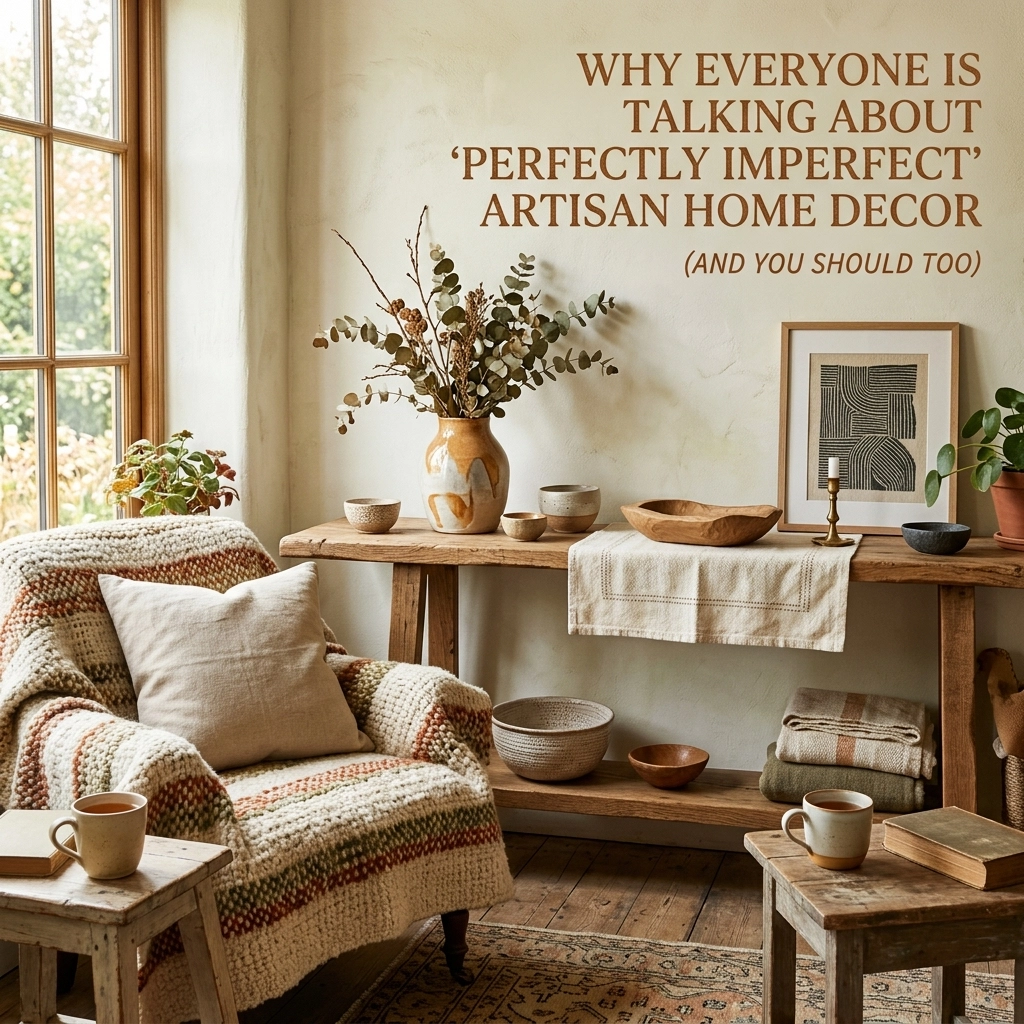

The Emergence of the 'Perfectly Imperfect' Aesthetic in Contemporary Interior Design
In the contemporary landscape of interior design, there has been a notable and documented shift toward what scholars and practitioners refer to as the "perfectly imperfect" aesthetic. This movement, which prioritizes the inherent irregularities of artisan-crafted goods over the sterile uniformity of mass-produced items, represents a significant departure from the industrial standards that have dominated the domestic environment for several decades. At its core, the perfectly imperfect movement is an acknowledgment that perfection in the home is often synonymous with an absence of character, whereas imperfection is synonymous with the presence of a human narrative. This human narrative is essential for creating a living space that feels authentic, lived-in, and emotionally resonant.
The rise of this aesthetic paradigm can be attributed to a growing cultural fatigue with the hyper-curated, showroom-style interiors that have historically been presented as the pinnacle of domestic achievement. As consumers increasingly seek out items that reflect a sense of individuality and history, the demand for handcrafted gifts and decor has seen a commensurate increase. At Copper & Hazel Boutique, we observe that the preference for the imperfect is not merely a transient trend but a fundamental re-evaluation of what constitutes value in the home. Value is no longer measured solely by the precision of a machine-cut edge but rather by the subtle variations in a hand-applied glaze or the natural grain of a sustainably sourced wood.
The Ontological Value of Imperfection in the Domestic Sphere
To understand why everyone is talking about perfectly imperfect decor, one must first understand the ontological value that imperfection brings to the domestic sphere. Imperfection serves as a marker of the artisanal process, a physical manifestation of the labor and time invested by the creator. When a decor item possesses slight irregularities, such as those found in a green basket small or a green basket large, it communicates a sense of authenticity that is absent in mass-produced alternatives. This authenticity is derived from the fact that no two handcrafted items are exactly alike; each piece possesses its own unique set of characteristics that distinguish it from all others.
The psychological impact of these irregularities cannot be overstated. Research suggests that human beings are naturally drawn to organic shapes and textures, which offer a sense of comfort and connection to the natural world. In contrast, the rigid symmetry and smooth surfaces of industrial manufacturing can often feel cold and uninviting. By incorporating artisan home decor into the living space, individuals are able to create an environment that feels more nurturing and psychologically supportive. This sense of support is vital in a world that is increasingly characterized by digital abstraction and mass-market homogeneity. The perfectly imperfect item acts as a grounding force, reminding the inhabitant of the physical, tactile reality of the world.

The Phenomenological Experience of Texture and Materiality
The perfectly imperfect aesthetic is deeply rooted in the phenomenological experience of texture and materiality. In the context of home decor, materiality refers to the physical substance of an object and how that substance is perceived through the senses. Artisan decor often utilizes natural materials that retain their original characteristics, such as wood, clay, stone, and natural fibers. These materials possess a tactile richness that invites engagement, encouraging the inhabitant to touch and feel the surfaces of their home. For instance, the textural quality of a flower wall hanging provides a visual and physical depth that a printed poster cannot replicate.
Texture is a critical element in the creation of a "lived-in" feeling. A room that lacks texture often feels flat and one-dimensional, whereas a room that incorporates a variety of textures feels layered and complex. The use of hand-applied finishes, such as the reactive glazes found in artisanal ceramics or the hand-painted details on a cow painting, introduces a level of visual interest that keeps the eye moving and the mind engaged. This engagement is a key component of the perfectly imperfect philosophy: the goal is not to create a static image of a room, but to create a dynamic space that evolves and changes over time.
The Influence of Wabi-Sabi and Historical Design Concepts
The contemporary focus on imperfection is heavily influenced by historical and philosophical design concepts, most notably the Japanese philosophy of wabi-sabi. Wabi-sabi is an aesthetic centered on the acceptance of transience and imperfection. It finds beauty in things that are "imperfect, impermanent, and incomplete." This philosophy encourages the appreciation of the natural cycle of growth and decay, suggesting that the most beautiful objects are those that bear the marks of time and usage. In the realm of home decor, this translates to an appreciation for patina, weathered surfaces, and the "gentle wear" that occurs as an item is used and loved over many years.
Incorporating these principles into the home allows for a more relaxed and forgiving approach to interior design. When perfection is the goal, every scratch or dent is seen as a failure; however, when imperfection is celebrated, every mark becomes a part of the item's history. This shift in perspective is liberating for the homeowner, as it removes the pressure to maintain an unattainable level of flawlessness. Instead, the focus shifts to the specialities of the items themselves, their stories, their origins, and their unique place within the home’s narrative.

Practical Applications: How to Incorporate Imperfection into Your Home
Integrating the perfectly imperfect aesthetic into one's living space requires a deliberate move away from traditional notions of symmetry and coordination. Rather than purchasing "sets" of furniture or decor, the practitioner of this style should look for individual pieces that resonate on an emotional level. This "collector's approach" results in a home that feels curated over time rather than decorated in a single day. At Copper & Hazel Boutique, we encourage our clients to select items that speak to their personal history or aesthetic preferences, such as a family recipe board that serves both a functional and sentimental purpose.
Some practical strategies for achieving this look include:
- Embracing Asymmetry: Instead of centering art perfectly on a wall, try hanging it slightly off-center to create a sense of movement and visual tension.
- Layering Textures: Combine different materials, such as a rough-hewn wooden table with soft linen napkins and a bee tin sign or a chicken tin for a touch of rustic metal.
- Mixing Eras: Pair vintage finds with contemporary artisan pieces to create a sense of historical depth.
- Highlighting the Handmade: Display items that clearly show the hand of the maker, such as pottery with visible finger marks or textiles with slight variations in the weave.
By following these principles, the homeowner can create a space that is not only visually interesting but also deeply personal. As interior designer Laura Lubin has noted, "Perfection no longer feels aspirational – it feels impersonal." The move toward the imperfect is, therefore, a move toward the personal.
The Sustainability and Longevity of Artisan-Crafted Goods
Another significant reason why the discourse surrounding artisan home decor has intensified is the increasing focus on sustainability and ethical consumption. Mass-produced items are often designed with "planned obsolescence" in mind, meaning they are intended to be replaced after a short period. In contrast, artisan-crafted goods are typically built to last, utilizing high-quality materials and traditional construction techniques. This longevity is a core component of the perfectly imperfect philosophy: an item that lasts for decades will naturally develop the patina and character that this aesthetic celebrates.
Furthermore, supporting small-scale artisans and boutiques like Copper & Hazel Boutique contributes to a more sustainable and equitable economy. By choosing to invest in handcrafted items, consumers are supporting the preservation of traditional crafts and providing a livelihood for skilled makers. This ethical dimension adds another layer of value to the perfectly imperfect item, as its beauty is matched by the integrity of its production. For those interested in seeing these items in person and meeting the makers, visiting our upcoming shows provides an excellent opportunity to experience the tactile reality of artisan decor.
Conclusion: The Future of the Perfectly Imperfect Home
In conclusion, the widespread fascination with perfectly imperfect artisan home decor is a multifaceted phenomenon that reflects deep-seated human needs for authenticity, comfort, and connection. By rejecting the sterile standards of industrial perfection, individuals are able to reclaim their living spaces as sites of personal expression and emotional resonance. The perfectly imperfect aesthetic is not merely a style; it is a philosophy that celebrates the human experience in all its messy, beautiful complexity.
As we look toward the future of interior design, it is clear that the artisanal and the imperfect will continue to play a central role. The home is, and should be, a reflection of those who inhabit it, a collection of stories, memories, and items that have been chosen with intention. Whether it is a whimsical anti-social butterfly piece or a dedicated she works hard for the honey decor item, the value lies in the unique character that only imperfection can provide.
"Beauty is measured by feeling and emotion, not perfection." - Christine Carney
To begin your journey into the world of artisanal decor, we invite you to explore our shop or visit our sample page to learn more about our approach to handcrafted gifts and decor. If you have any questions, please feel free to contact us.

🔖Tags:
#ArtisanDecor #HomeStyling #InteriorDesignTrends #WabiSabi #CopperAndHazel #HandcraftedGifts #AuthenticLiving #SustainableDecor #PerfectlyImperfect
Leave a Reply
Your email address will not be published. Required fields are marked *
Comment *
Name * ___________________________
Email * __________________________
Website __________________________
[ ] Save my name, email, and website in this browser for the next time I comment.
[Post Comment]