

The Intersection of Artisanal Craftsmanship and Psychological Well-Being
In the contemporary landscape of high-velocity professional obligations and digital saturation, the residential environment has transitioned from a mere domicile into a critical sanctuary for psychological recuperation. The question frequently arises within the spheres of interior design and environmental psychology: Can handcrafted home accessories truly facilitate a reduction in physiological and psychological stress? Empirical evidence and psychological theory suggest that the presence of artisanal, handmade items: as opposed to mass-produced, industrial goods: exerts a significant influence on the emotional regulation of the inhabitants. Handcrafted accessories, characterized by their unique physical attributes and the inherent human intentionality of their creation, serve as more than mere aesthetic enhancements; they act as catalysts for sensory grounding and cognitive relief. By integrating pieces from Copper & Hazel Boutique, individuals can curate a space that actively participates in the mitigation of cortisol levels and the promotion of a more profound sense of domestic serenity.
The Neurobiology of Handcrafted Intentionality
To understand the stress-reducing capabilities of handcrafted home accessories, one must first examine the neurobiological response to visual and tactile stimuli that exhibit "human markers." Unlike the sterile uniformity found in factory-manufactured products, handcrafted items possess subtle irregularities: often referred to as "the mark of the maker": which signal authenticity to the human brain. These signals of authenticity are crucial for psychological grounding because they provide a contrast to the artificial perfection of the digital and industrial worlds. When an individual interacts with a piece of framed art, the brain processes the depth, texture, and deliberate strokes of the creator as indicators of a tangible, human-centric reality. This recognition of human effort and intention functions as a subconscious reassurance, fostering a sense of safety and continuity that is often absent in mass-produced environments. Consequently, the presence of these items facilitates a shift from a state of cognitive alertness to a state of restorative observation, thereby reducing the cumulative load of daily stressors.

The Psychological Fatigue of Industrial Uniformity
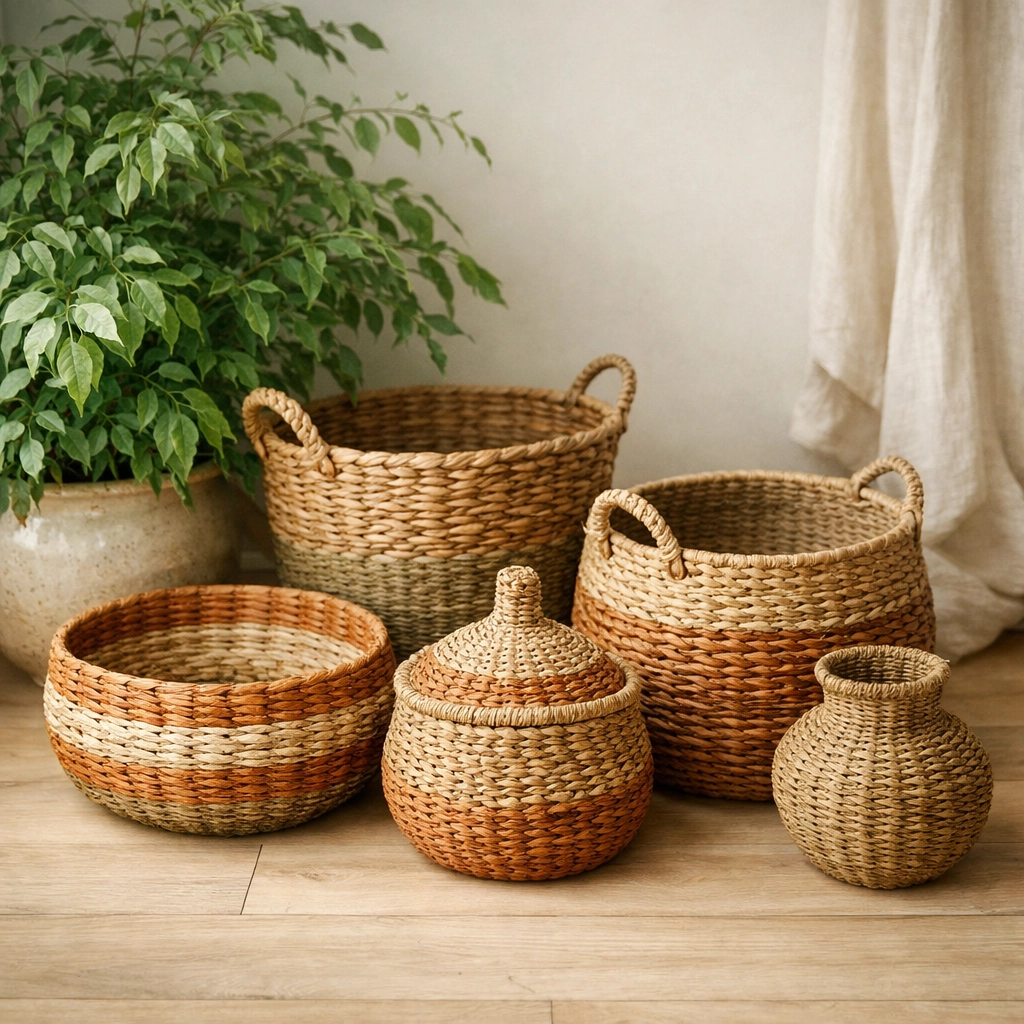
The modern home is often populated with items produced via mass manufacturing, a process that prioritizes efficiency and identical reproduction over individual character. While functional, this industrial uniformity can contribute to what environmental psychologists describe as "cognitive fatigue." Cognitive fatigue occurs when the brain is subjected to environments that lack visual interest or that present monotonous patterns, leading to a diminished capacity for attention and an increase in irritability. Handcrafted accessories mitigate this fatigue by introducing organic diversity into the visual field. For instance, the varied textures of a green basket small provide a complex sensory experience that engages the brain in a non-taxing, restorative manner. Because these items are unique, they offer a source of "soft fascination," a psychological state where the mind is gently occupied by interesting stimuli without requiring the intense focus associated with work or problem-solving. This state of soft fascination is essential for the recovery of cognitive resources and the eventual reduction of stress.
Tactile Feedback and the Sensory Regulation of Stress
Beyond visual aesthetics, the tactile nature of handcrafted goods plays a vital role in sensory regulation and emotional stabilization. The human nervous system is highly sensitive to touch, and the textures associated with natural materials: such as wood, cotton, wool, and clay: have been shown to elicit calming physiological responses. Handcrafted textiles, often found in country living collections, offer a physical softness and weight that mass-manufactured synthetics often fail to replicate. Engaging with these materials through tactile interaction can lower heart rates and stabilize breathing patterns (a process known as sensory grounding). When a person touches a handcrafted object, the sensory input is rich and varied, providing a direct connection to the physical world. "The tactile irregularity of a handmade piece provides a grounding point for the wandering mind, effectively anchoring the individual in the present moment," notes interior designer Sarah L. This grounding effect is a fundamental component of mindfulness, a practice widely recognized for its efficacy in reducing anxiety and chronic stress.
The Symbolic Value of Handcrafted Memory and Intention
Handcrafted accessories are often imbued with a sense of narrative and history that transcends their physical form. Each item represents a specific period of time dedicated to its creation, carrying with it the memory of the artisan's labor. This symbolic value contributes to a more emotionally resonant living space. When a home is filled with items that possess a story: such as those found in our shop: the environment begins to reflect a set of values centered around patience, quality, and human connection. This narrative depth provides a psychological buffer against the "disposable culture" of the modern era, which often exacerbates feelings of transience and anxiety. By surrounding oneself with objects that have been intentionally crafted, the individual reinforces their own sense of worth and stability. The home becomes a curated collection of meaningful artifacts rather than a transient storage space for commodities, which is a pivotal shift in creating a stress-free living environment.

Creating a Curated Sanctuary for Emotional Regulation
The process of selecting and arranging handcrafted accessories can be viewed as an act of self-care and environmental curation. By choosing items like the anti-social butterfly or the she works hard for the honey decor pieces, a homeowner is intentionally shaping their environment to reflect their personal identity and emotional needs. This sense of agency over one's physical surroundings is a significant factor in mental health; it provides a sense of control that counteracts the unpredictability of the outside world. Furthermore, the act of curating a space with handcrafted goods encourages a slower, more deliberate approach to home life. It invites the resident to appreciate the details, to care for the objects, and to engage in the maintenance of their sanctuary. This deliberate engagement is inherently de-stressing, as it shifts the focus from external pressures to the immediate, manageable, and beautiful aspects of the domestic sphere.
Empirical Evidence Supporting Craft-Based Environments
While much of the benefit of handcrafted decor is experiential, there is a growing body of academic research that supports these claims. Studies in the field of neuroaesthetics have demonstrated that the human brain exhibits specific activation patterns when viewing handcrafted or "organic" shapes as opposed to sharp, geometric, industrial lines. These patterns are associated with the release of dopamine and the activation of the parasympathetic nervous system, which is responsible for the body's "rest and digest" functions. Additionally, research into "biophilic design": the practice of incorporating natural elements and textures into human-made spaces: consistently shows that environments with high levels of natural variation and artisanal quality lead to lower self-reported stress levels and improved mood. "The presence of handcrafted items in the home acts as a non-pharmacological intervention for daily anxiety," - Dr. Julian R. This evidence reinforces the notion that handcrafted accessories are not merely decorative, but are essential components of a health-conscious home.
Practical Implementation: Selecting Your Stress-Reducing Decor
For those seeking to leverage the de-stressing power of handcrafted items, the implementation should be thoughtful and gradual. It is not necessary to replace every item in the home immediately; rather, the focus should be on introducing key pieces that offer the most significant sensory and psychological impact. Beginning with highly tactile items, such as dishes or woven storage, can provide immediate grounding benefits. Following this, one might consider visual focal points like handcrafted art or unique wall hangings to combat visual monotony. The goal is to create a balanced environment where the handcrafted and the functional coexist, providing a multi-layered sensory experience that supports emotional regulation. As the home becomes more aligned with these artisanal principles, the inhabitant will likely notice a subtle but persistent shift in their overall stress levels and a renewed appreciation for their domestic sanctuary.
Conclusion: The Lasting Impact of the Artisanal Home
In conclusion, handcrafted home accessories offer a robust and multi-faceted approach to stress reduction within the residential environment. Through the mechanisms of sensory grounding, the mitigation of cognitive fatigue, and the symbolic power of human intentionality, these items transform the home into a proactive space for mental health. By moving away from the sterile uniformity of mass production and embracing the unique, textured reality of the handcrafted, individuals can foster a deeper sense of peace and stability. The artisanal home is not just an aesthetic choice; it is a commitment to a lifestyle that prioritizes well-being, connection, and the restorative power of the human touch.
🔖Tags: #HandcraftedDecor #StressRelief #HomeWellness #ArtisanalLiving #InteriorPsychology #CopperAndHazel #HandmadeGifts #MentalWellbeing #SlowLiving
Leave a Reply
Your email address will not be published. Required fields are marked *
Comment
[]
[]
[_________________________________________________________]
Name *
[___________________________]
Email *
[___________________________]
Website
[___________________________]
[ ] Save my name, email, and website in this browser for the next time I comment.
[Post Comment]