

The Conceptual Framework of Brontë-core Aestheticism
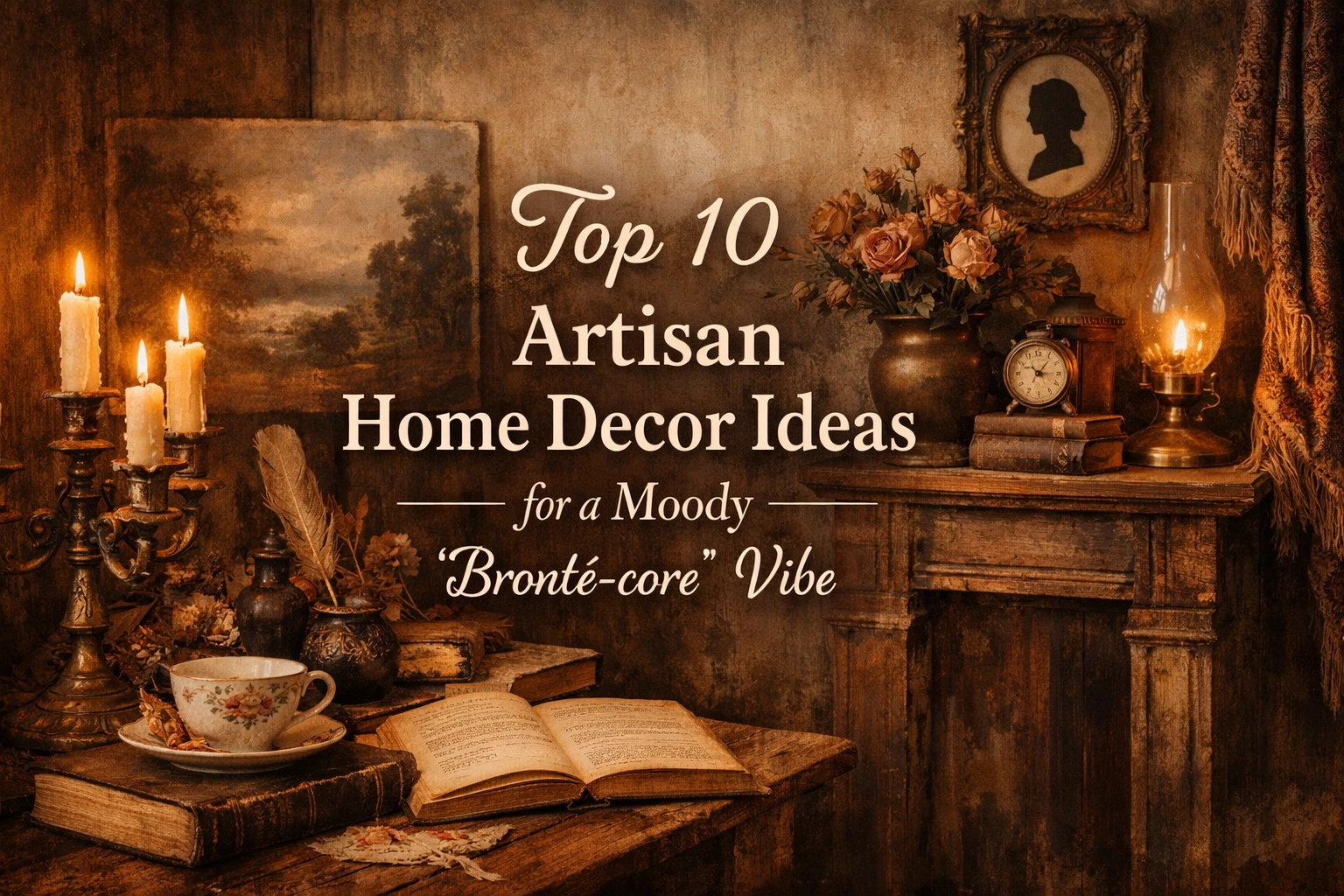
The emergence of the 'Brontë-core' aesthetic represents a significant cultural intersection between nineteenth-century literary romanticism and contemporary interior design methodologies. This aesthetic, which draws its primary inspiration from the lives and works of Charlotte, Emily, and Anne Brontë, is characterized by a profound appreciation for the moody, the atmospheric, and the weathered. To understand Brontë-core, one must first understand the environmental influences of the Yorkshire moors: a landscape defined by its ruggedness, its isolation, and its volatile meteorological patterns. In the context of home decor, this translates into an interior environment that prioritizes dark, saturated palettes, heavy textures, and a curated selection of artisan objects that evoke a sense of history and intellectual solitude.
The application of Brontë-core principles within a domestic space requires a deliberate movement away from the sterile minimalism of the modern era toward a more layered, narrative-driven approach to decoration. It is an aesthetic of the mind as much as it is an aesthetic of the visual field. By incorporating elements that suggest a life lived amongst books, nature, and hand-crafted utility, a homeowner can cultivate a space that feels both timeless and deeply personal. At Copper & Hazel Boutique, we recognize that the artisan nature of decor is central to achieving this specific atmosphere, as mass-produced items often lack the inherent "soul" or "patina" required to sustain a moody, Gothic-Victorian narrative.
1. The Literary Foundation: Curated Book Assemblages
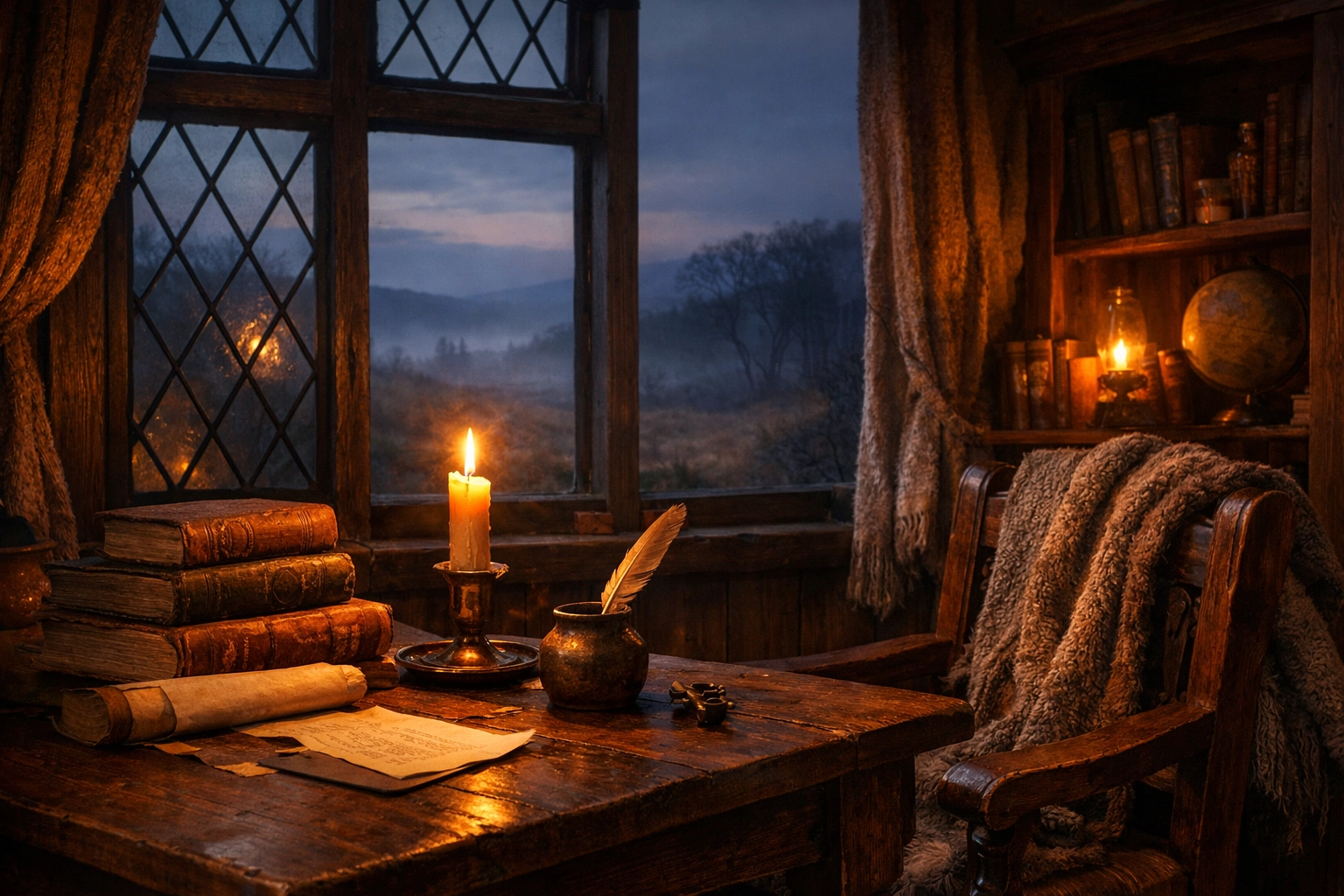
Central to any Brontë-inspired interior is the physical presence of literature. In the nineteenth-century domestic sphere, books were not merely vessels for information but were significant aesthetic objects in their own right. To achieve a moody Brontë-core vibe, one must consider the structural significance of the printed word as a foundational component of the interior environment. The visual weight of a collection of books provides a sense of intellectual gravity and historical continuity that is essential to the Brontë-core philosophy.
For those seeking to anchor their shelving units or bedside tables with this literary weight, the Set of Three Books offers an ideal artisan solution. These books provide the necessary tactile and visual texture that defines a scholarly, atmospheric space. By grouping these volumes together, one creates a focal point that suggests a commitment to the contemplative life, a core tenet of the Brontë sisters' own lived experiences. The presence of books serves to reinforce the idea that the home is a place of study and reflection, moving the decor beyond mere ornamentation into the realm of meaningful curation.
2. Botanical Preservation and Memento Mori
The Brontë-core aesthetic is deeply intertwined with the natural world, specifically the flora of the moors and the Victorian fascination with botanical preservation. This fascination often bordered on the melancholic, reflecting a "memento mori" philosophy: a reminder of the transience of life. In a moody interior, this is best represented through dried or preserved floral elements that maintain a skeletal, structural beauty rather than the vibrant, fleeting life of fresh blooms.
An artisan Flower Wall Hanging serves as a sophisticated medium for introducing this botanical element into the home. Unlike fresh arrangements that require constant renewal, a wall-hanging preserves the form of the plant in a state of permanent grace. This permanence is key to the Gothic Victorian heritage, where the preservation of nature allowed for a continuous connection to the outdoors even during the harsh winter months. Such pieces add a layer of organic texture to the walls, breaking up the darkness of a moody palette with the intricate, delicate patterns of nature.
3. Pastoral Representation in Visual Art
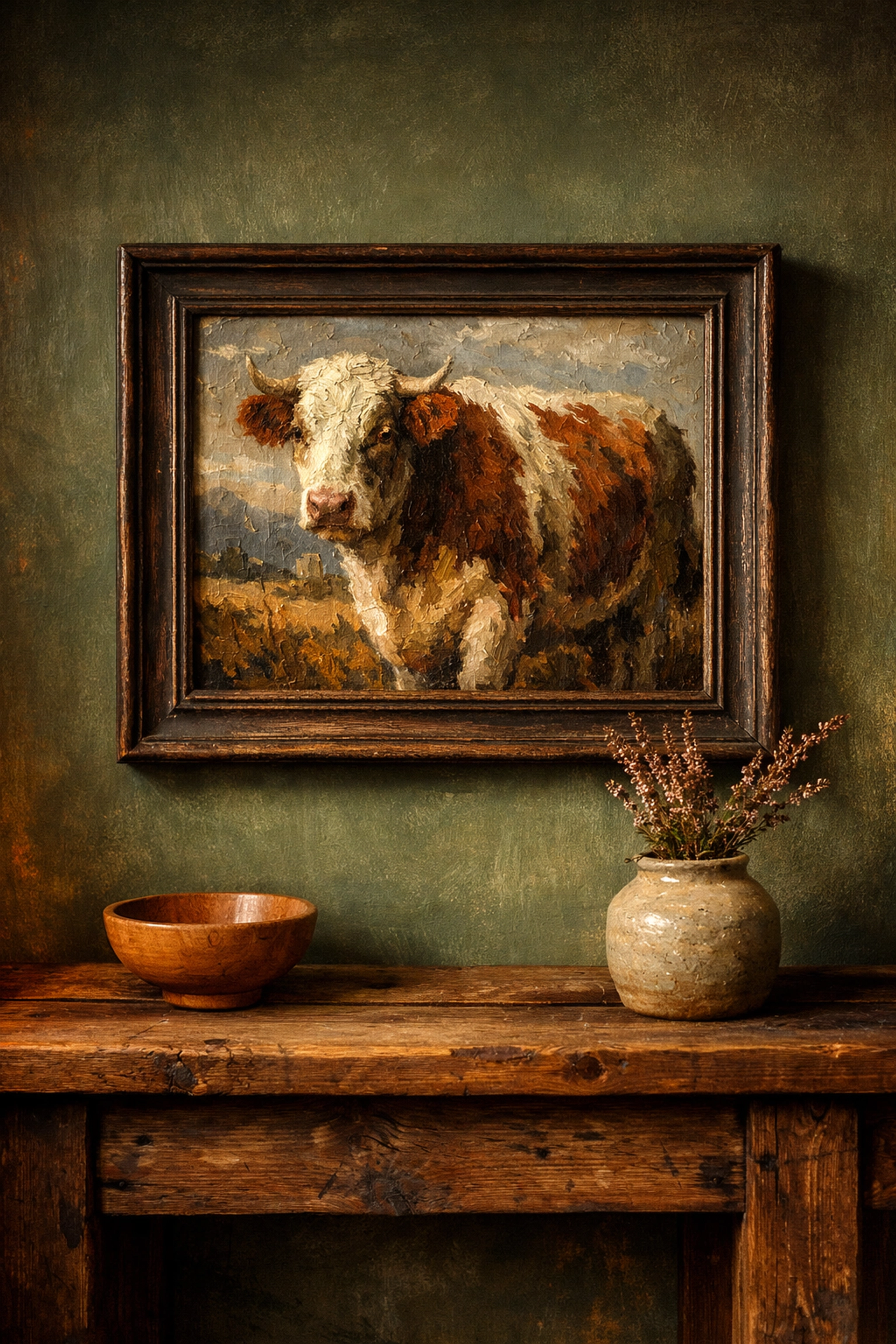
To capture the essence of the moors within an interior space, one must incorporate visual representations of the pastoral landscape and its inhabitants. The Brontë-core vibe is significantly enhanced by art that reflects a rustic, somewhat somber view of rural life. This is not the idealized pastoralism of the Rococo period, but rather a more grounded, textured representation of the livestock and landscapes that defined the nineteenth-century agrarian experience.
The Cow Painting available at Copper & Hazel provides a perfect example of this aesthetic direction. The inclusion of bovine imagery introduces a sense of quiet, sturdy presence into a room. When placed within a dark-walled study or a candlelit dining area, such a piece functions as a window into a rugged, rural past. The artisan quality of the painting ensures that it carries the necessary visual depth to stand up against the heavy textures and saturated colors typical of the Brontë-core palette.
4. Textural Depth Through Natural Fibers
A common pitfall in attempting a moody aesthetic is the potential for the space to feel cold or unwelcoming. To mitigate this, one must employ heavy, textured materials that provide both visual and physical warmth. In the Brontë-core tradition, this involves the use of natural raw materials such as wood, stone, and woven fibers. These materials evoke the rugged landscape of the moors and provide a necessary counterpoint to the more refined elements of Victorian decor.
The utilization of a Green Basket (Large) offers a practical and aesthetic means of introducing these natural fibers. The deep green hue aligns perfectly with the rich accent colors of the Victorian era, while the woven structure provides a tactile quality that suggests handcrafted utility. In a Brontë-core room, such a basket might be used to store heavy wool throws or additional volumes of poetry, reinforcing the narrative of a cozy, self-contained sanctuary.
5. The Domestic Archive: Personalized Heritage
Brontë-core is fundamentally rooted in the idea of lineage and the transmission of domestic knowledge. The Victorian home was a place where family history was meticulously recorded and preserved. To replicate this sense of the "domestic archive," one should incorporate decor that feels personalized and historical, even if it is a modern artisan creation. This approach creates a sense of continuity between the past and the present, which is vital for an authentic moody vibe.
A Family Recipe display serves as an excellent artifact in this regard. By elevating a simple domestic document to the status of a decor object, the homeowner honors the labor and traditions of previous generations. This fits perfectly within the Brontë-core framework, which values the internal life of the home and the small, meaningful rituals of daily existence. It acts as a focal point for the kitchen or dining area, grounding the space in a sense of specific, localized history.
6. Entomological Symbolism and Melancholy
The Victorian era was characterized by a scientific interest in the natural world, often manifested in the collection and display of insects. In the context of Brontë-core, this entomological interest takes on a more symbolic, perhaps even psychological, meaning. The "anti-social" nature of the Brontë sisters: their preference for solitude and their complex relationship with the social world: can be represented through specific motifs that celebrate the solitary or the misunderstood.
The Anti-Social Butterfly product captures this sentiment with precision. It combines the traditional Victorian interest in lepidopterology with a contemporary nod to the introverted nature of the Brontë-core inhabitant. As a piece of artisan decor, it provides a whimsical yet slightly dark commentary on the desire for privacy and reflection. Such items add a layer of personality and wit to an otherwise serious, moody interior, ensuring that the space remains a reflection of the individual's inner world.

7. Weathered Metalwork and Industrial Rusticism
While much of the Brontë-core aesthetic focuses on soft textiles and natural woods, the inclusion of weathered metalwork is essential for providing structural contrast. The nineteenth century was a period of significant industrial transition, and the presence of tin or brass elements in the home reflects this historical context. To maintain the moody vibe, these metal elements should appear aged or patinated, avoiding the high-shine finishes of modern manufacturing.
The Small Chicken Tin Sign is an effective way to introduce this weathered metal texture. Its small scale allows it to be tucked into corners, placed on mantelpieces, or integrated into a gallery wall. The rustic imagery and the matte, slightly distressed finish of the tin contribute to the sense of a house that has been lived in and weathered over time. This aged appearance is a key component of the Gothic Victorian heritage, where the passage of time is viewed as a source of beauty and character.
8. The Ritual of the Daily Artifact
In a moody, Brontë-inspired home, even the most functional items should be considered for their aesthetic contribution. The daily rituals of drinking tea or coffee become opportunities to engage with the artisan philosophy. By choosing functional items that possess a handcrafted feel, the homeowner ensures that the Brontë-core vibe is maintained throughout all aspects of their domestic life.
The She Works Hard For The Honey mug is a prime example of a functional artifact that fits this description. Its artisan quality and specific imagery align with the pastoral and entomological themes previously discussed. When held in a dimly lit room while reading by the fire, such an object becomes part of the atmospheric experience of the home. It reinforces the idea that every object within the Brontë-core space should be chosen with intention and an eye for its narrative potential.
9. Apicultural Accents and the Working Landscape
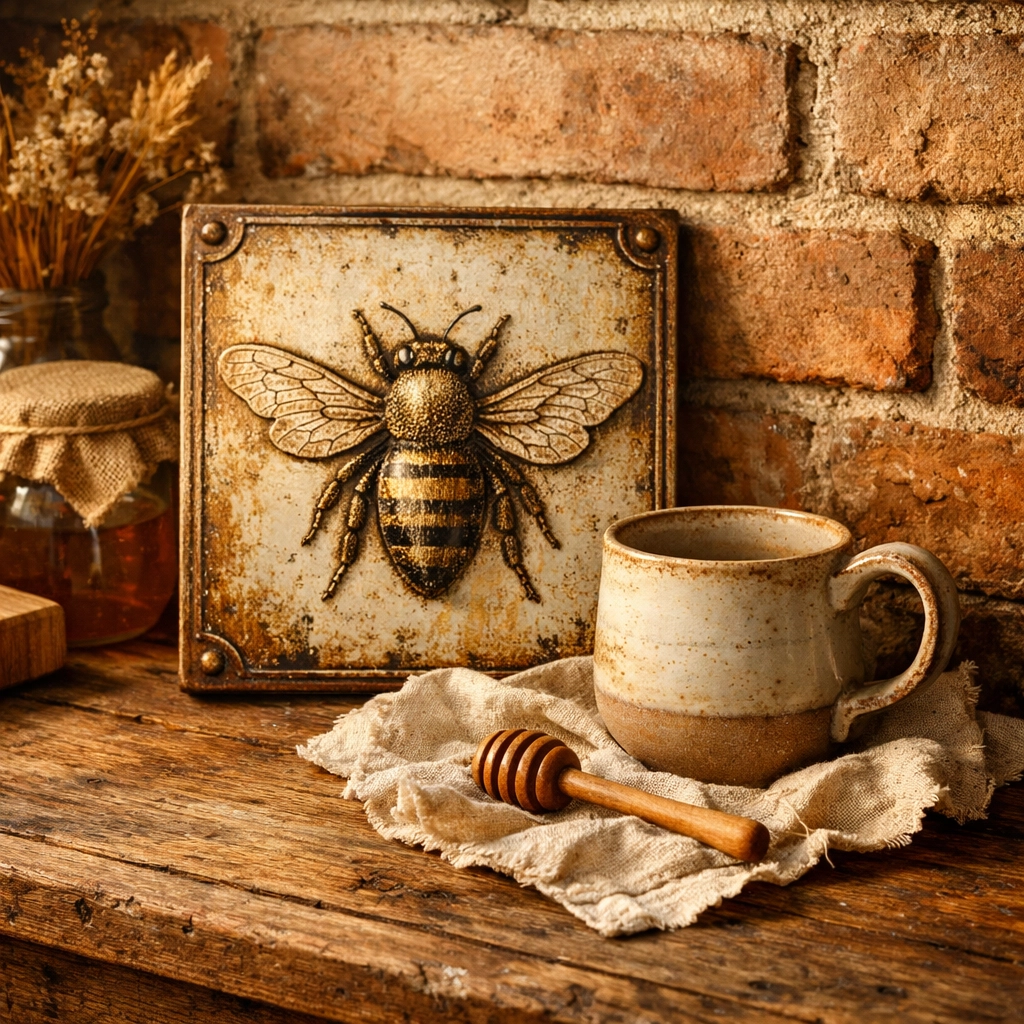
The connection to a "working" landscape: one that provides for its inhabitants: is a recurring theme in nineteenth-century literature. The bee, as a symbol of industry, community, and the bounty of nature, is a common motif in Victorian decor. In a Brontë-core setting, apicultural accents provide a link to the outdoor world and the seasonal rhythms of the moors.
Incorporating a Bee Tin Sign allows for the introduction of this motif in a way that feels authentic to the rustic, moody aesthetic. The use of metal as a medium ensures that the piece has the necessary weight and durability to fit within a textured interior. By placing such an item in a hallway or kitchen, the homeowner subtly references the interconnectedness of the domestic space and the natural environment, a relationship that was central to the Brontë sisters' creative inspiration.
10. Layered Utility: Diminutive Natural Elements
The final component of a successful Brontë-core vibe is the layering of small, utilitarian objects that provide additional texture and visual interest. These items should not be scattered haphazardly but should be placed with the same consideration given to larger furniture pieces. By repeating motifs and materials throughout a room, the homeowner creates a cohesive and immersive environment.
The Green Basket (Small) is an ideal tool for this final layer of decoration. Its smaller scale makes it suitable for holding keys, correspondence, or small botanical specimens. Like its larger counterpart, it introduces natural fibers and rich color into the space, reinforcing the overarching themes of the Brontë-core aesthetic. The repetitive use of such artisan items ensures that the moody, curated vibe is sustained in every corner of the home, from the primary focal points to the smallest details.
"The true essence of a home lies in the items that whisper stories of the past while providing comfort for the present." - John
In conclusion, the creation of a moody Brontë-core vibe is an exercise in thoughtful, artisan-led curation. By focusing on dark, saturated palettes, rich textures, and objects that suggest a life of intellectual and pastoral depth, one can transform a standard living space into a sanctuary of Gothic romance and Victorian charm. At Copper & Hazel Boutique, we are dedicated to providing the handcrafted pieces necessary to bring this unique and evocative aesthetic to life.
🔖Tags: #Brontecore #MoodyDecor #ArtisanGifts #HandcraftedHome #VictorianGothic #CopperAndHazel #InteriorDesignIdeas #HomeDecorTrends
Leave a Reply
Your email address will not be published. Required fields are marked *
Comment *
Name *
Email *
Website
[ ] Save my name, email, and website in this browser for the next time I comment.
[Post Comment]