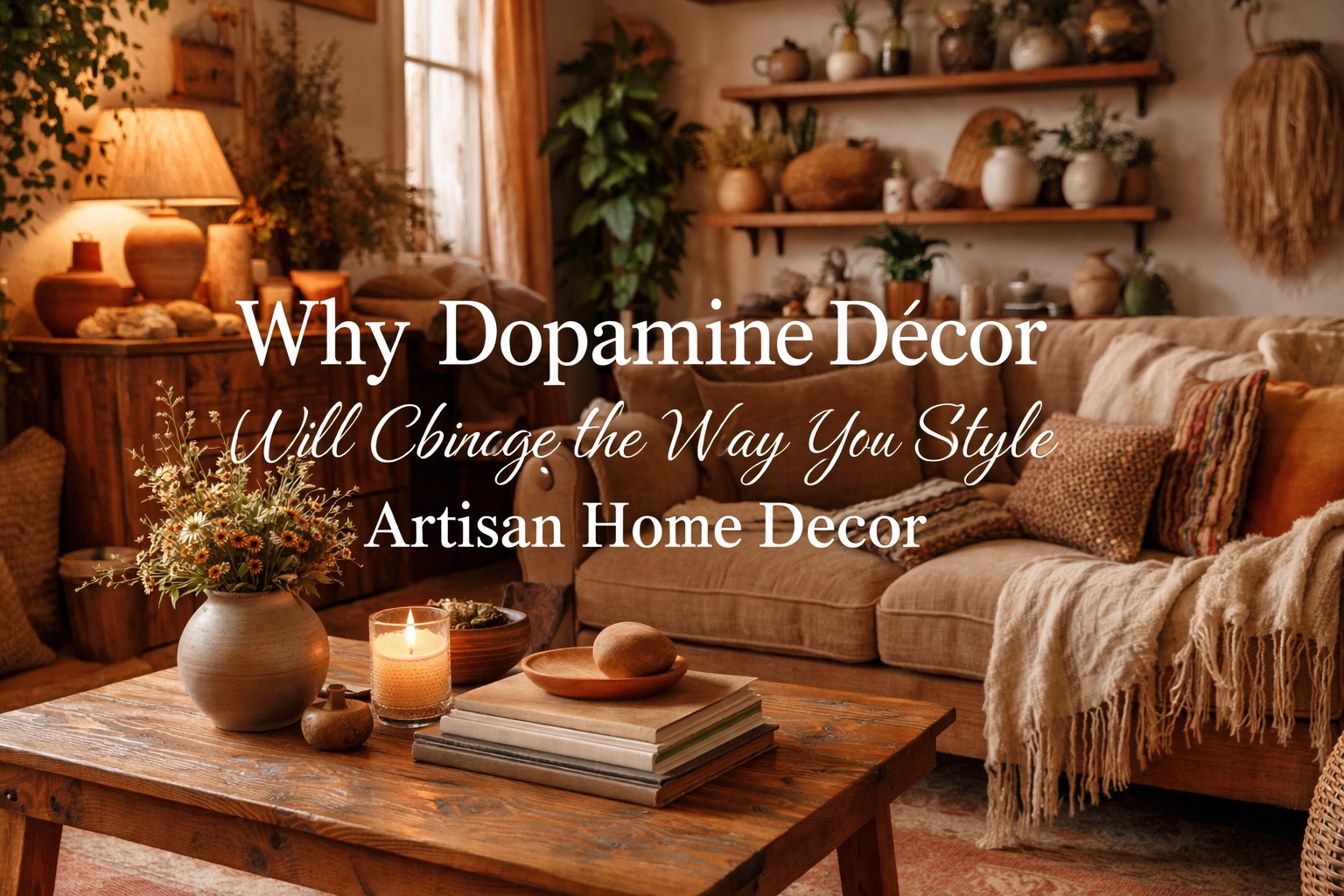

The emergence of Dopamine Décor represents a fundamental departure from the minimalist design philosophies that have dominated interior styling for the better part of two decades. This emotionally-driven approach to home decoration prioritizes personal well-being, self-expression, and the neurological impact of visual stimuli over conventional aesthetic restraint. For those who appreciate artisan home decor and the unique character of handcrafted pieces, this shift in design philosophy offers an opportunity to reimagine how curated collections are displayed, celebrated, and integrated into daily living spaces.
Understanding the principles behind Dopamine Décor: and recognizing why this movement has gained such considerable momentum: requires an examination of both the psychological foundations that inform the trend and the practical applications that make it particularly well-suited to showcasing artisan and handmade items.
The Psychological Foundation of Dopamine Décor
The term "Dopamine Décor" derives its name from dopamine, the neurotransmitter associated with pleasure, reward, and motivation in the human brain. Research in environmental psychology has long established that visual surroundings exert measurable influence on emotional states, cognitive function, and overall psychological well-being. Vibrant colors, engaging forms, and visually stimulating environments trigger the brain's pleasure centers in ways that are remarkably similar to other positive experiences that naturally elevate dopamine levels.
What distinguishes Dopamine Décor from previous colorful or maximalist movements is its explicit acknowledgment that interior spaces function as tools for mental health and happiness. Rather than adhering to standardized design catalogs or adopting universally "safe" color palettes, this approach encourages individuals to surround themselves with objects, colors, and textures that generate genuine emotional responses. The philosophy rejects the notion that good design necessarily requires restraint, uniformity, or adherence to trending neutrals.
"Your home should make you feel something every time you walk through the door," notes interior styling philosophy. "If your space doesn't spark joy or comfort or excitement, what purpose is it truly serving?"
Why Artisan Home Decor Becomes the Hero
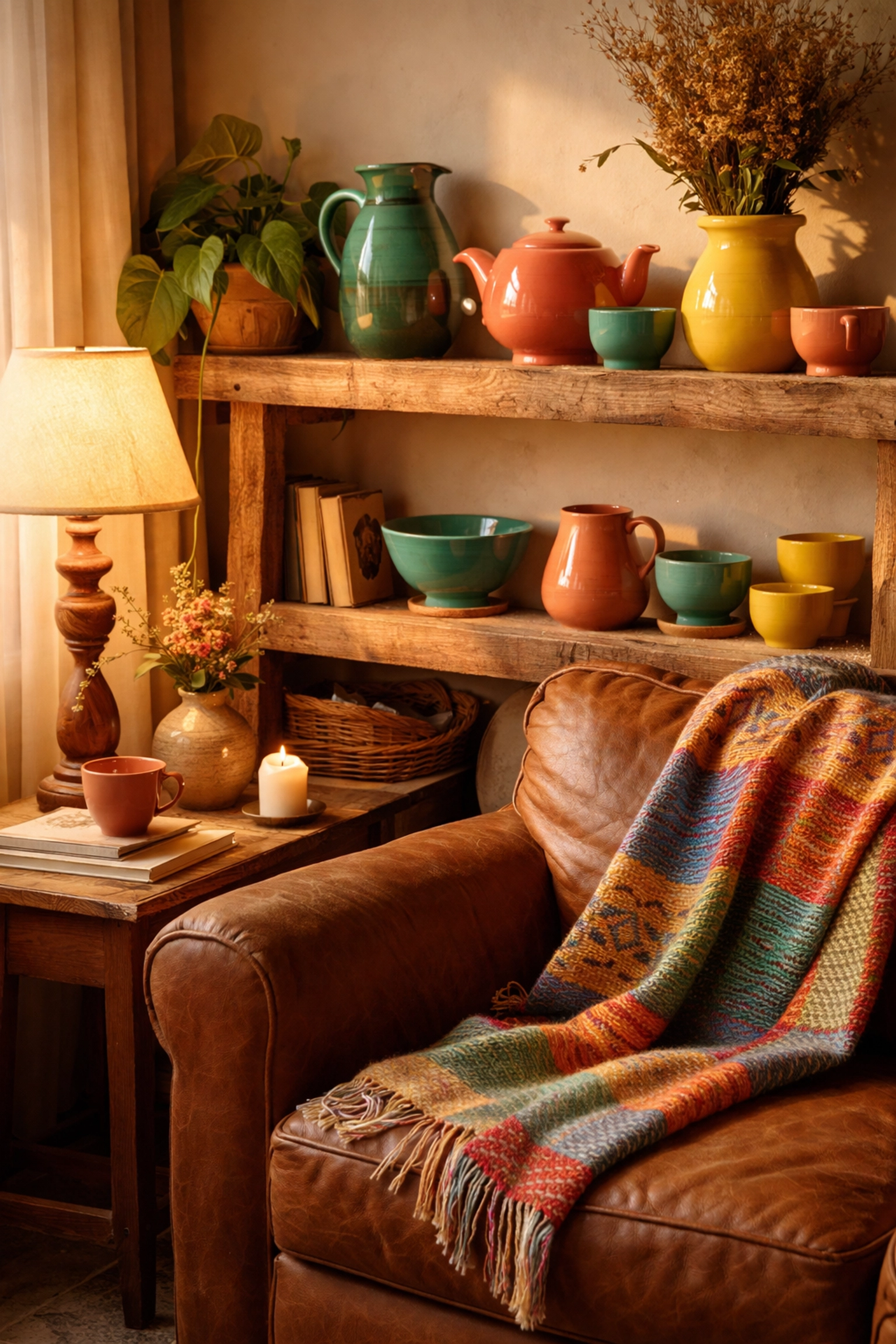
The Dopamine Décor movement particularly elevates artisan home decor from the role of supporting accent to that of central design hero. Handcrafted items: with their inherent irregularities, unique character, and evidence of human touch: possess precisely the qualities that this design philosophy celebrates. Unlike mass-produced pieces that prioritize uniformity and reproducibility, artisan pieces carry stories, demonstrate craftsmanship, and offer the kind of visual interest that engages the eye and stimulates positive emotional responses.
Consider the difference between a factory-produced ceramic vase and one shaped by hand in a potter's studio. The artisan piece will display subtle variations in glaze, minor asymmetries in form, and evidence of the maker's individual technique. These "imperfections" are, in the context of Dopamine Décor, precisely what makes the object valuable as a design element. The eye is drawn to examine the piece more closely, the brain registers it as something unique and special, and the resulting emotional response contributes to the overall atmosphere of the space.
Vintage items, family heirlooms, and handmade accessories gain particular prominence within this framework because they evoke nostalgia and personal meaning. Objects that connect us to memories, relationships, or cultural heritage function as mood boosters in ways that generic decorative items simply cannot replicate. This validation of uniqueness and personal significance aligns perfectly with the values that drive curated home decor enthusiasts to seek out one-of-a-kind pieces in the first place.
The Shift from Coordinated Uniformity to Intentional Maximalism
Traditional interior design guidance has long emphasized coordination, cohesion, and the careful limitation of color palettes: often suggesting that rooms should feature no more than three complementary tones. Dopamine Décor fundamentally challenges this conventional wisdom by embracing saturated colors, pattern-mixing, and what might be termed "intentional maximalism."
This approach encourages the bold application of color across walls, textiles, and furnishings. Saturated blues, deep emeralds, vibrant hot pinks, and sunny yellows are no longer reserved for cautious accent pillows but instead become primary elements of the design scheme. Patterns that might traditionally be considered "clashing" are deliberately layered to create visual richness and complexity that rewards extended engagement.
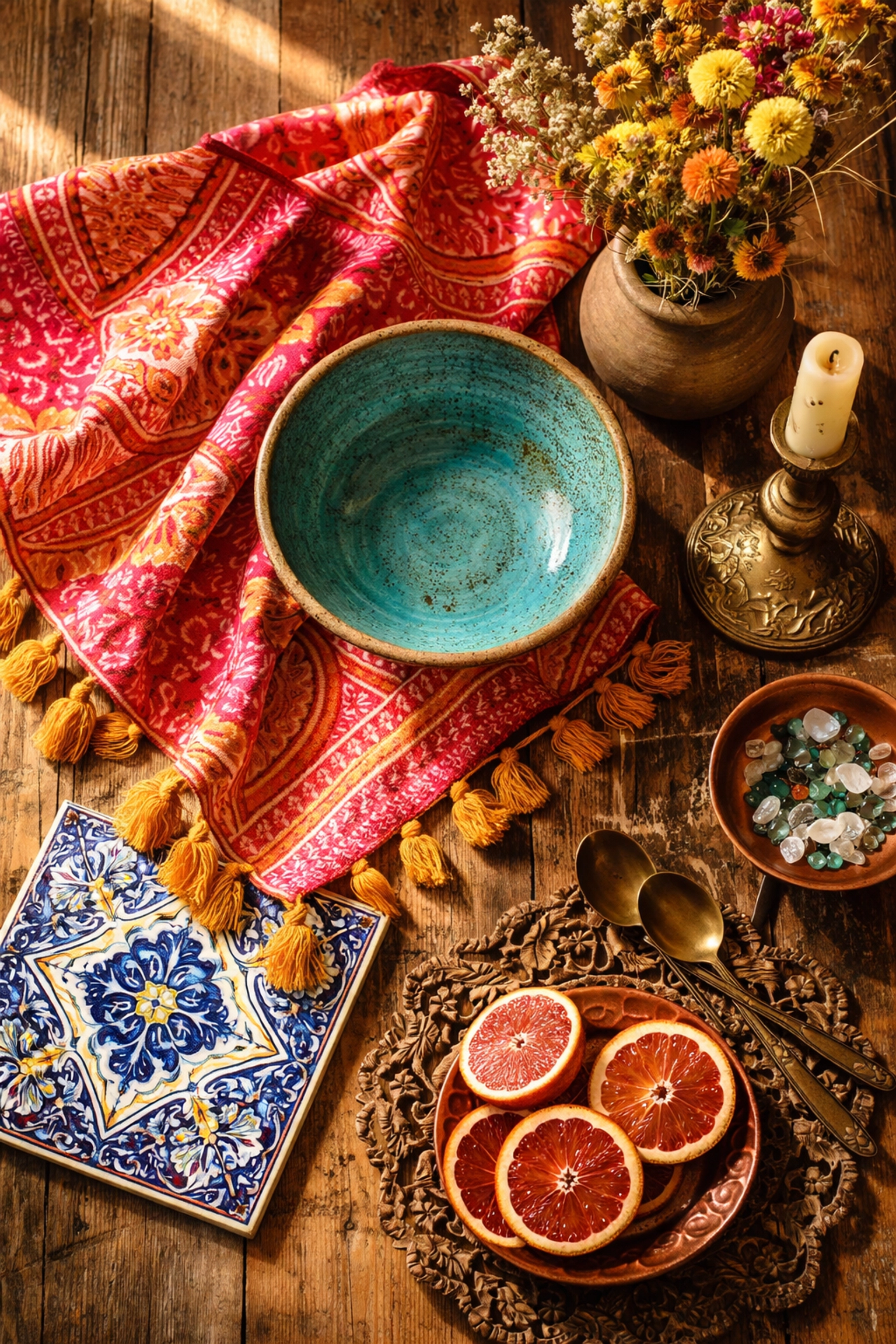
For collectors of artisan home decor, this shift in styling philosophy removes many of the constraints that previously made displaying diverse collections challenging. When every piece must coordinate with a carefully controlled palette, introducing a boldly colored handmade textile or a vividly glazed ceramic piece becomes problematic. Under the Dopamine Décor paradigm, however, these statement pieces become exactly what the space requires: anchors of color and interest that give rooms their distinctive character.
Practical Applications for Styling Curated Collections
Implementing Dopamine Décor principles when styling curated home decor requires attention to several key considerations. The goal is not chaos or randomness, but rather intentional composition that prioritizes emotional impact and personal meaning.
Embrace Color Confidence
The first principle involves releasing anxiety around color combination. If a handcrafted piece brings you joy in its original, vibrant form, that emotional response is valid design data. Trust your reactions to color rather than second-guessing them against external rules about what "should" coordinate. Artisan pieces often feature color combinations that emerged organically from traditional techniques or the maker's intuition: these combinations frequently work beautifully together precisely because they evolved outside the constraints of contemporary design trends.
Create Moments of Visual Interest
Rather than distributing decorative objects evenly throughout a space, Dopamine Décor encourages the creation of concentrated moments of visual interest. Grouping artisan pieces together: perhaps on a dedicated shelf, console table, or within a gallery wall arrangement: allows their collective impact to register more strongly than scattered individual placements might achieve. These curated vignettes become destinations for the eye, areas where attention naturally gathers and lingers.
Layer Lighting Strategically
The trend emphasizes layered lighting over single ceiling fixtures, recognizing that illumination profoundly affects how objects appear and how spaces feel. Decorative lamps, particularly vintage-inspired or artisan pieces, become functional art within this framework. A handcrafted lamp provides not only illumination but also serves as a sculptural object worthy of attention in its own right. Multiple light sources at varying heights create ambiance and allow different areas of a room to be emphasized or subdued as desired.
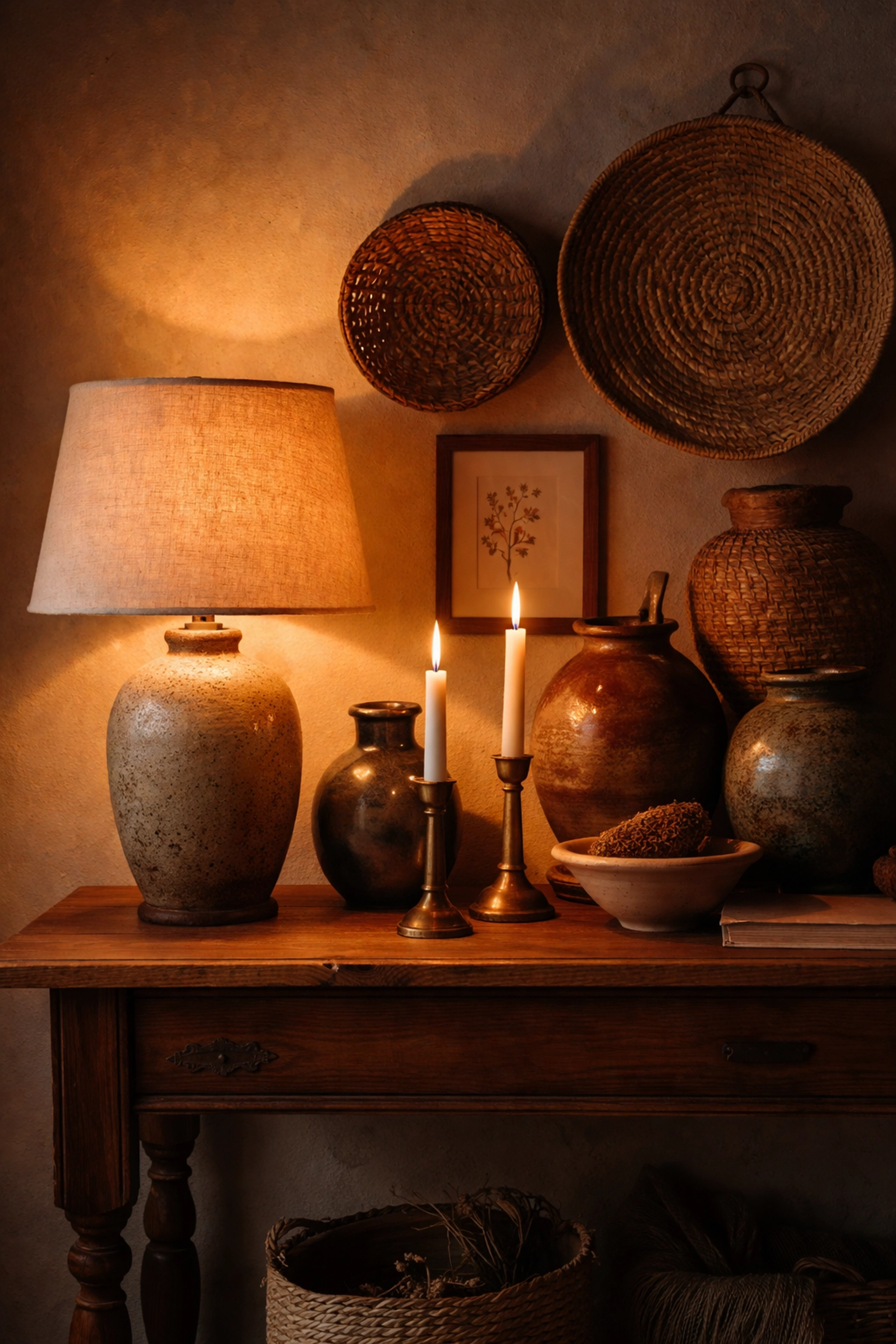
Honor Objects with Stories
Perhaps most importantly, Dopamine Décor validates the impulse to surround oneself with objects that carry personal significance. That vintage glass lamp from a memorable trip, the ceramic bowl made by a local artisan whose work you've followed for years, the textile passed down through family generations: these pieces deserve prominent placement rather than relegation to storage or obscure corners. Their stories and the memories they evoke contribute directly to the mood-enhancing function of the space.
The Intersection with Sustainability and Intentional Consumption
It bears noting that Dopamine Décor's celebration of vintage, artisan, and handmade items aligns meaningfully with broader movements toward sustainability and intentional consumption. By valuing unique pieces over mass-produced alternatives, this design philosophy naturally supports local makers, traditional crafts, and the reduction of disposable consumption patterns. The objects you choose to display become investments in both your well-being and in the preservation of artisanal skills and traditions.
Discover thoughtfully curated artisan pieces at Copper & Hazel Boutique's shop to begin building a collection that brings genuine joy to your daily environment.
Moving Forward with Dopamine Décor
The Dopamine Décor movement represents more than a passing trend: it reflects a growing recognition that our living environments profoundly influence our emotional states and that prioritizing personal happiness in design choices is both valid and valuable. For enthusiasts of curated home decor and artisan pieces, this philosophy offers permission to celebrate beloved objects boldly, to embrace color confidence, and to create spaces that genuinely support well-being.
The handcrafted items you love deserve to be displayed prominently, enjoyed daily, and appreciated for the unique character they bring to your home.
🔖 Tags: artisan home decor, curated home decor, dopamine decor, home styling, handcrafted decor, maximalist design, interior styling trends
Leave a Reply
Your email address will not be published. Required fields are marked *
Comment *
Name *
Email *