
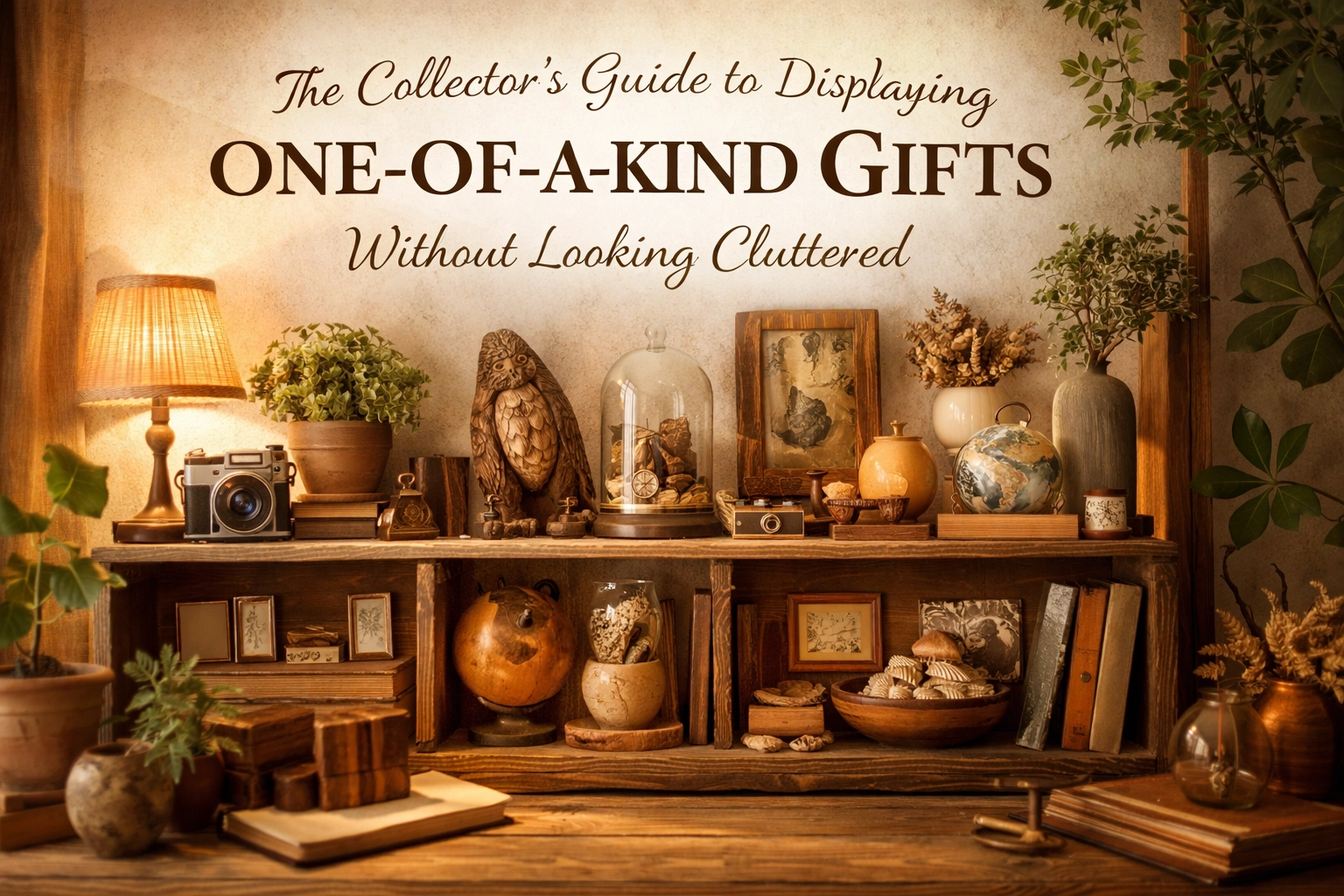

The accumulation of one-of-a-kind gifts and handcrafted treasures presents a distinctive challenge for the modern collector, namely the balance between meaningful display and visual overwhelm. For those who appreciate artisan craftsmanship and unique decor pieces, the question of how to showcase these items without creating an appearance of disorganization or excessive clutter remains a persistent concern. This comprehensive guide examines the fundamental principles, strategic methodologies, and practical applications that enable collectors to present their cherished items in a manner that celebrates their individuality while maintaining aesthetic harmony within the home environment.
Understanding the Psychology of Visual Clutter
Before addressing specific display techniques, it is essential to understand what constitutes visual clutter from a perceptual standpoint. Visual clutter, in its most basic definition, occurs when the eye cannot find a resting point within a given space, when objects compete for attention rather than complement one another. The phenomenon is not necessarily about the quantity of items present but rather about the organization (or lack thereof) and the intentionality behind their placement.
"A crowded shelf isn't cluttered if every item has purpose and position." - Margaret Chen, Interior Design Quarterly
The distinction between a curated collection and a cluttered accumulation lies primarily in the deliberate arrangement of objects, the utilization of negative space, and the establishment of visual hierarchies that guide the viewer's eye through the display in a coherent and pleasing manner.
The Principle of Negative Space
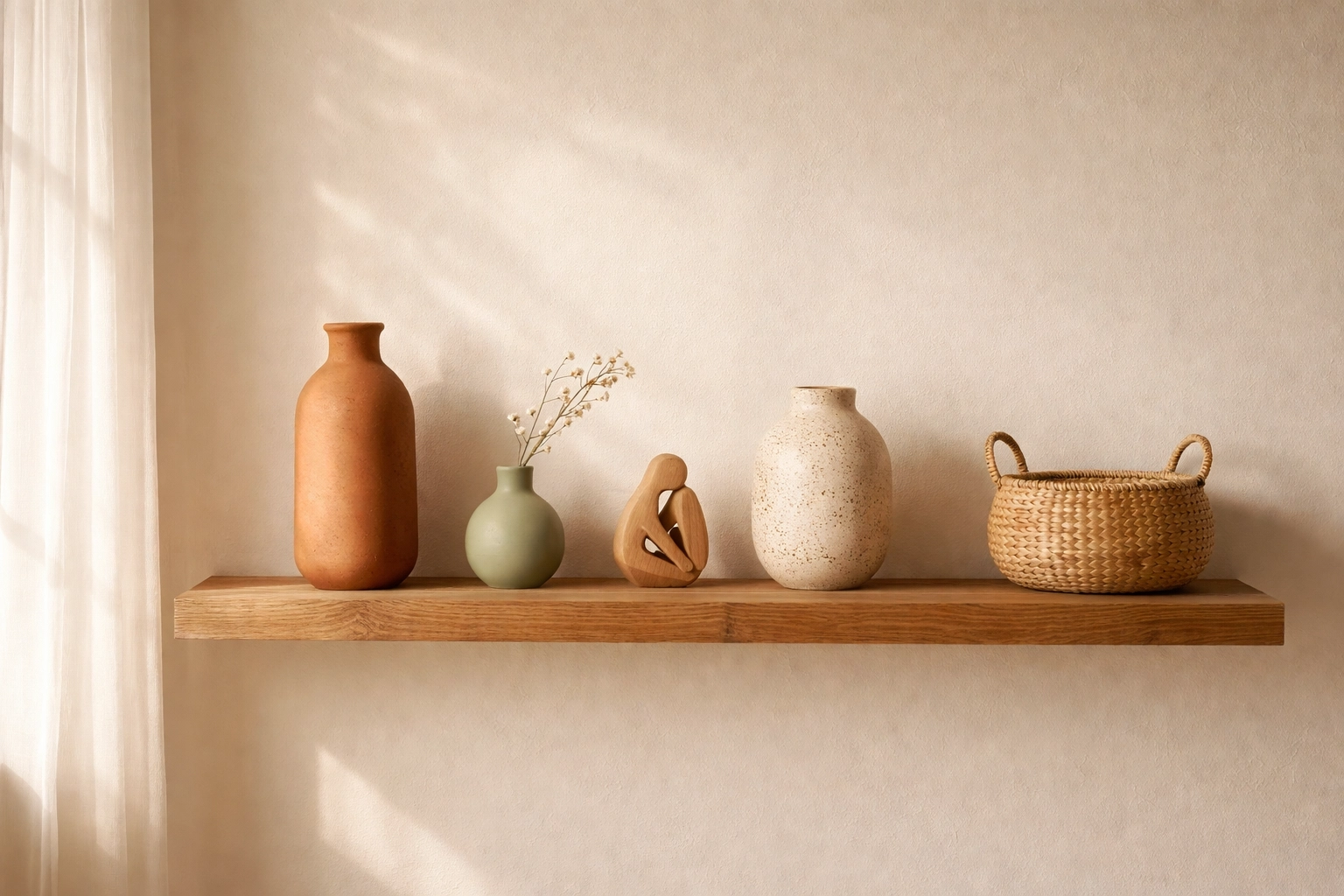
Negative space, sometimes referred to as white space in design terminology, constitutes the empty areas surrounding and between displayed objects. This principle of negative space serves a crucial function in collection display, as it allows individual pieces to breathe and command attention without competing with neighboring items. The strategic employment of negative space creates visual pauses that prevent the overwhelming sensation often associated with densely packed displays.
When arranging your one-of-a-kind gifts and handcrafted items, consider allocating approximately forty to fifty percent of your display surface to empty space. This ratio, while seemingly counterintuitive to those wishing to showcase their entire collection simultaneously, actually enhances the visual impact of each individual piece and creates a sense of intentional curation rather than haphazard accumulation.
Establishing Visual Hierarchy Through Grouping
The concept of visual hierarchy, which determines the order in which the eye perceives elements within a composition, proves invaluable when displaying collected items. By establishing clear focal points and supporting elements, collectors can create displays that feel organized and purposeful. This establishment of visual hierarchy through thoughtful grouping ensures that your most treasured pieces receive appropriate attention while smaller or supporting items enhance rather than detract from the overall presentation.
Grouping techniques that prove particularly effective include:
- Thematic grouping: Arranging items that share common themes, materials, or artistic origins
- Color-based grouping: Clustering pieces with complementary or analogous color relationships
- Scale-based grouping: Pairing items of varying sizes to create visual interest and depth
- Functional grouping: Displaying items that share similar purposes or intended uses

Practical Display Solutions for the Collector
Having established the theoretical foundations, we now turn to the practical applications and specific display solutions that enable collectors to implement these principles within their own spaces. The selection of appropriate display furniture and accessories plays a significant role in determining whether a collection appears curated or chaotic.
The Strategic Use of Display Cases and Shadow Boxes
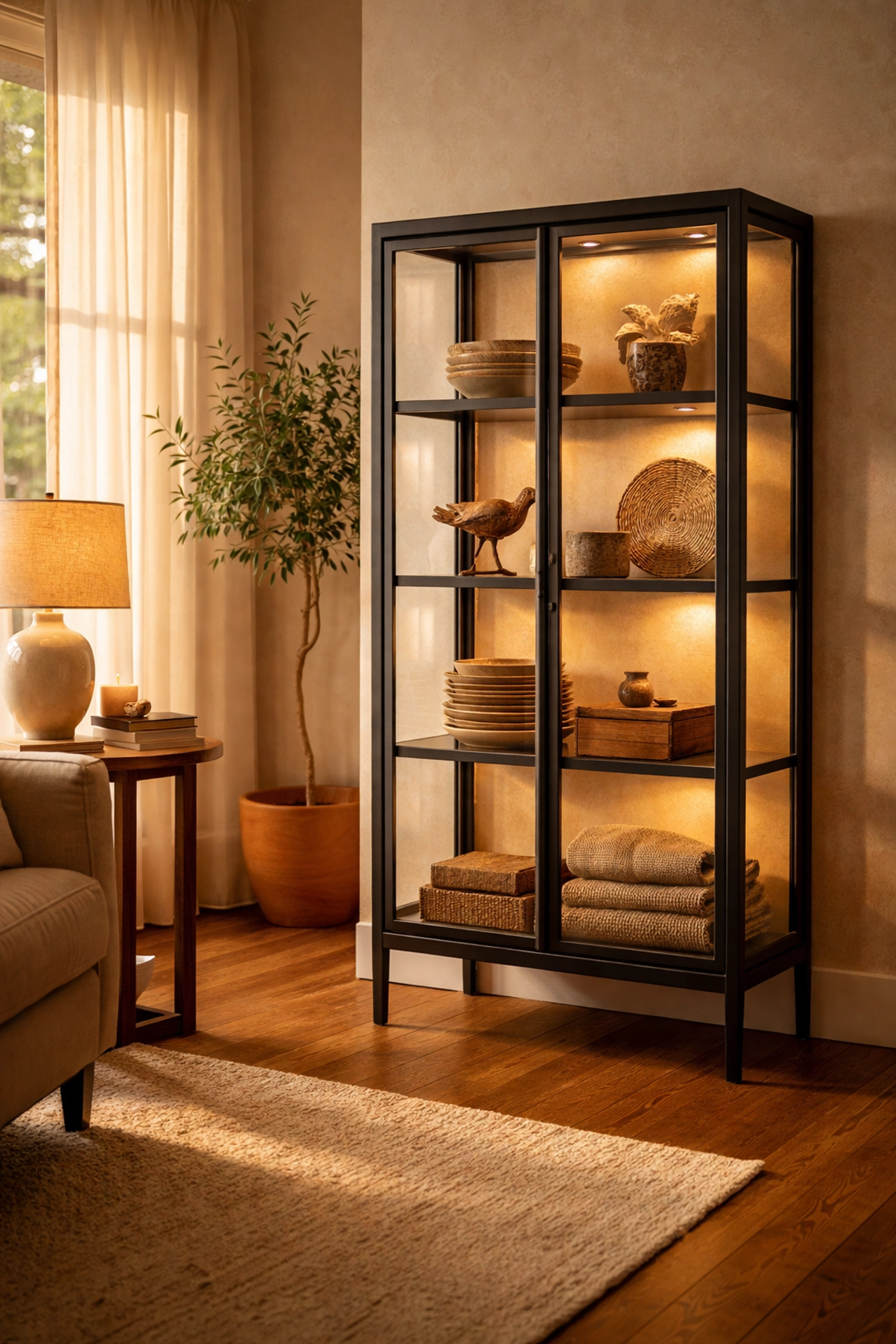
Display cases and shadow boxes serve as invaluable tools for the collector seeking to contain and organize smaller one-of-a-kind items. These enclosed display solutions offer several advantages, including dust protection, physical organization, and the creation of defined boundaries that prevent visual spillover into surrounding spaces. Shadow boxes, in particular, provide an excellent method for showcasing delicate handcrafted items while simultaneously framing them as intentional art pieces worthy of focused attention.
When selecting display cases for your collection, consider choosing units with clean lines and minimal ornamentation, as overly decorative cases can compete with the items they contain and contribute to the very visual clutter you seek to avoid.
Floating Shelves and Tiered Arrangements
Floating shelves represent another highly effective display solution, particularly for collectors with limited floor space who wish to utilize vertical surfaces. The tiered arrangement of floating shelves at varying heights creates visual interest while providing ample display surface without the visual weight of traditional bookcases or display cabinets. This approach to floating shelves and tiered arrangements allows for flexible reorganization as your collection grows and changes over time.
When implementing a floating shelf display, maintain consistent spacing between shelves and resist the temptation to fill every available inch of surface area. Remember that the principle of negative space applies equally to vertical displays as it does to horizontal surfaces.
The Rotation System: A Museum-Inspired Approach
Perhaps the most effective strategy for displaying extensive collections without creating visual overwhelm involves the implementation of a rotation system, similar to those employed by museums and galleries. This museum-inspired approach acknowledges that not every item in a collection needs to be on display at all times, and that rotating pieces in and out of view actually enhances appreciation for individual items while maintaining fresh visual interest throughout the home.
Consider establishing a quarterly or seasonal rotation schedule, wherein a curated selection of pieces is displayed while others rest in proper storage. This rotation system approach offers multiple benefits:
- Prevents visual fatigue and maintains viewer interest
- Allows for seasonal or thematic displays that feel fresh and intentional
- Protects delicate items from prolonged light exposure and dust accumulation
- Provides opportunity to reassess and reorganize display arrangements regularly
Lighting Considerations for Collection Display
The role of lighting in collection display cannot be overstated, as appropriate illumination serves to highlight individual pieces, create atmosphere, and establish focal points within the display arrangement. Proper lighting considerations transform a collection from a simple grouping of objects into a curated exhibition worthy of appreciation.
Accent lighting, particularly in the form of small spotlights or LED strips, draws attention to specific pieces while creating depth and dimension within the display. Natural light, while aesthetically pleasing, should be carefully managed to prevent fading or damage to delicate handcrafted items. The strategic placement of lighting sources can dramatically alter the perception of a display, making even modest collections appear museum-worthy and intentional.
Maintaining Balance as Your Collection Grows
For the dedicated collector of one-of-a-kind gifts and handcrafted treasures, the challenge of maintaining balance intensifies as acquisitions continue over time. The key to sustainable collection display lies in establishing clear parameters and exercising discernment in both acquisition and display decisions.
Consider implementing a "one in, one out" policy for display items, wherein the addition of a new piece necessitates the rotation or removal of an existing displayed item. This approach to maintaining balance ensures that your collection remains curated rather than accumulated, and that each displayed piece continues to receive the attention and appreciation it deserves.
At Copper & Hazel Boutique, we understand the joy of collecting unique, handcrafted pieces and the desire to display them beautifully within your home. Browse our carefully curated selection of artisan gifts and decor items that deserve a prominent place in your thoughtfully arranged collection.
🔖 Tags: handcrafted decor, collection display, home organization, artisan gifts, interior styling, one-of-a-kind gifts, display ideas
Leave a Reply
Your email address will not be published. Required fields are marked *
Comment *
Name *
Email *
Website