
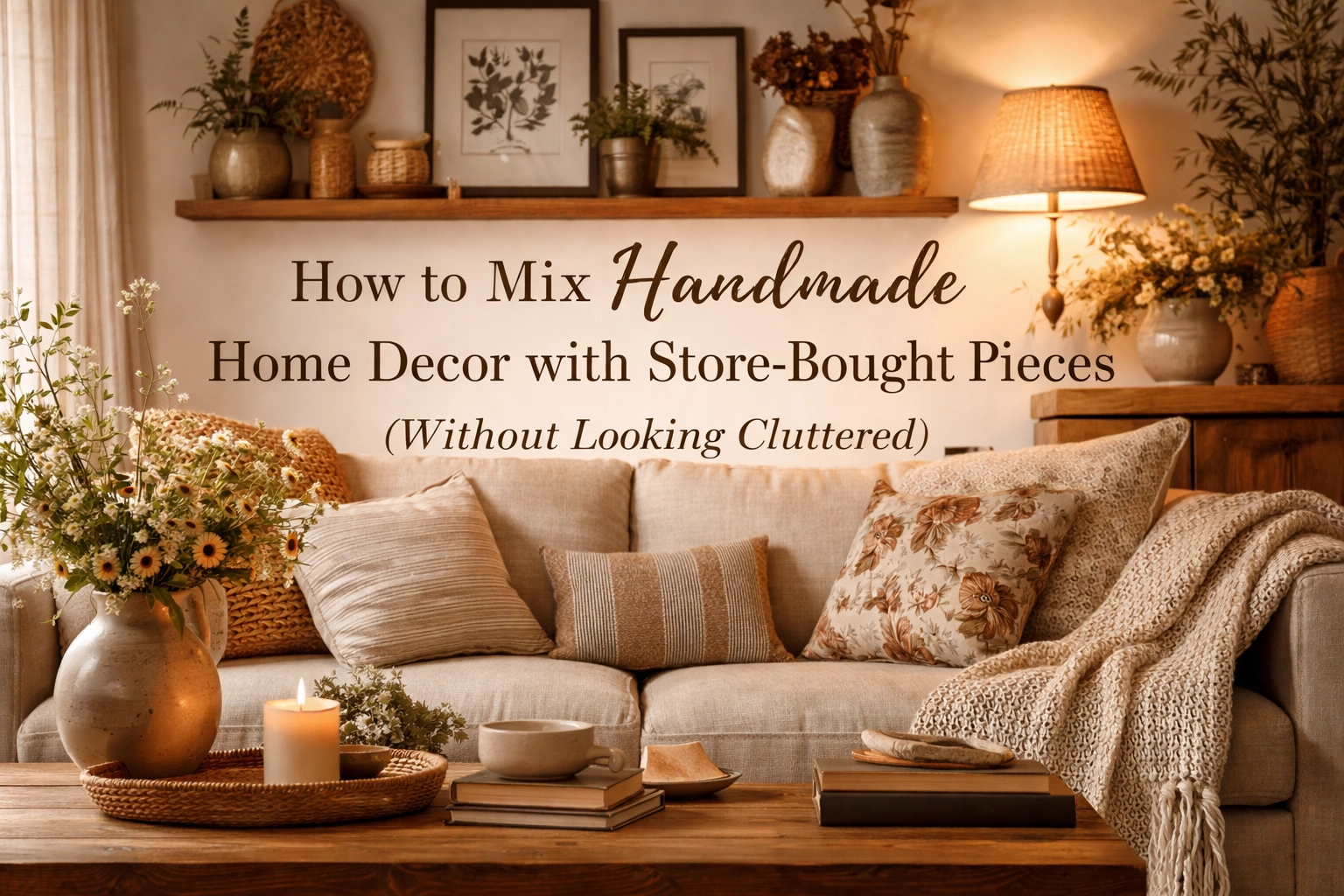

The art of combining handmade home decor with store-bought pieces represents one of the most rewarding yet challenging endeavors in contemporary interior design. Many homeowners find themselves caught between two seemingly opposing forces: the desire to showcase unique, artisan-crafted items that carry personal meaning and the practical necessity of incorporating mass-produced furniture and accessories that provide structural cohesion to a living space. The fundamental question that arises, therefore, is how one might successfully integrate these disparate elements without creating an environment that appears disorganized, overwhelming, or simply cluttered.
This comprehensive guide shall explore the principles, strategies, and practical techniques that enable homeowners to achieve a harmonious balance between handcrafted authenticity and store-bought functionality. The methodology presented herein draws upon established design principles while acknowledging the unique challenges that contemporary decorators face when attempting to curate spaces that feel both intentional and personal.
Understanding the Foundation: The 80/20 Principle in Home Decoration
The cornerstone of successfully mixing handmade and store-bought decor lies in what design professionals commonly refer to as the 80/20 rule. This principle suggests that approximately eighty percent of your living space should maintain a cohesive, unified aesthetic, typically achieved through store-bought basics such as furniture, wall treatments, and foundational pieces, while the remaining twenty percent should be dedicated to handmade or collected items that serve as meaningful accents.
The rationale behind this principle is relatively straightforward: by establishing a consistent visual foundation, you create a backdrop against which handmade pieces can truly distinguish themselves. Without this foundational consistency, individual items (regardless of their quality or craftsmanship) tend to compete for attention rather than complement one another. The 80/20 rule, therefore, functions not as a limitation but rather as a framework that allows your curated pieces to shine with appropriate prominence.
"The secret to a well-designed space isn't filling every corner, it's knowing what to leave empty and what to highlight." - Sarah M., Interior Design Consultant
Strategic Placement: Reserving Handmade Pieces for Accessories and Art
One of the most effective strategies for avoiding visual clutter involves reserving handmade pieces primarily for accessories, lighting fixtures, artwork, and textiles rather than attempting to mix handmade and store-bought elements across all furniture categories. This approach maintains structural cohesion throughout the space while simultaneously ensuring that your unique handmade items receive the attention and appreciation they deserve.
Consider, for instance, the difference between a room where handmade elements appear randomly distributed across furniture, accessories, and decorative objects versus a room where store-bought furniture provides a clean, consistent foundation upon which carefully selected handmade ceramics, framed art, or textile pieces serve as intentional focal points. The latter arrangement creates what designers often describe as "visual breathing room", spaces within the overall composition where the eye can rest before moving to the next point of interest.
Large statement pieces, such as a handcrafted ceramic chandelier or a hand-painted dresser, function most effectively when they are positioned as deliberate focal points rather than scattered throughout multiple rooms without clear purpose.
Establishing and Maintaining a Unified Color Palette
Before introducing any handmade pieces into your existing decor scheme, it is essential to define a clear color palette and commit to maintaining consistency within that palette. This unified approach serves a crucial function: it helps disparate items, whether handmade or store-bought, whether acquired years apart or purchased simultaneously, feel intentionally curated rather than randomly assembled.
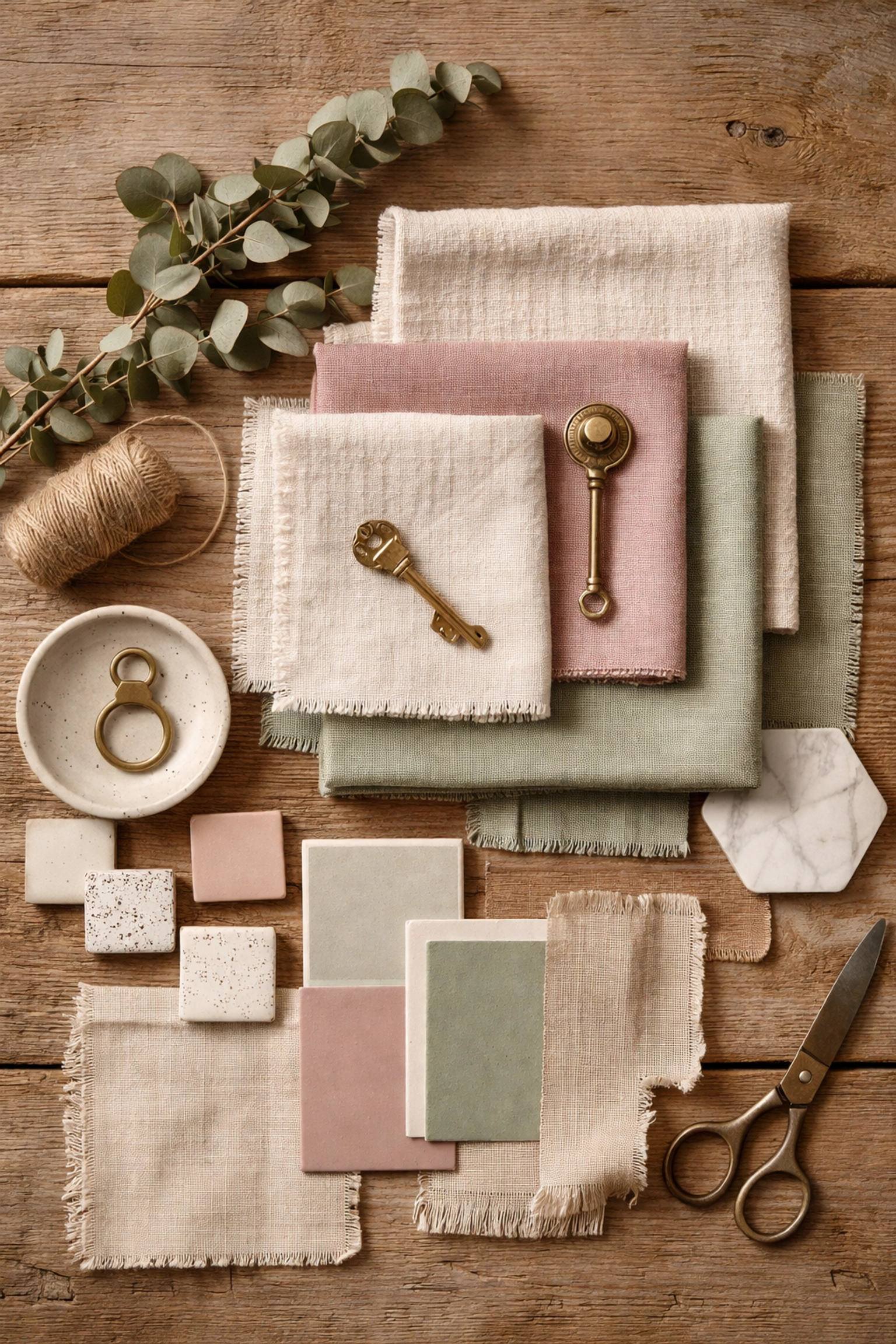
The process of establishing a color palette need not be complicated. Begin by identifying three to five colors that appear consistently throughout your existing decor, including wall colors, major furniture pieces, and any decorative elements you intend to retain. Once this palette has been defined, use it as a filtering mechanism when considering new acquisitions. A handmade pottery piece that falls outside your established color scheme, however beautiful it may be in isolation, may ultimately contribute to visual chaos rather than harmony when placed within your home.
This principle applies equally to pieces you might find at Copper & Hazel Boutique or at local craft fairs. The question should never simply be "Do I like this piece?" but rather "Does this piece work within my established visual framework?"
Creating Visual Interest Through Texture and Contrast
While maintaining color consistency remains paramount, the deliberate introduction of textural contrast represents one of the most powerful tools available for creating visual interest without contributing to clutter. The strategic placement of handmade and store-bought pieces in direct contrast to each other generates a dynamic quality that prevents spaces from appearing monotonous or overly coordinated.
Consider the following examples of effective textural contrast:
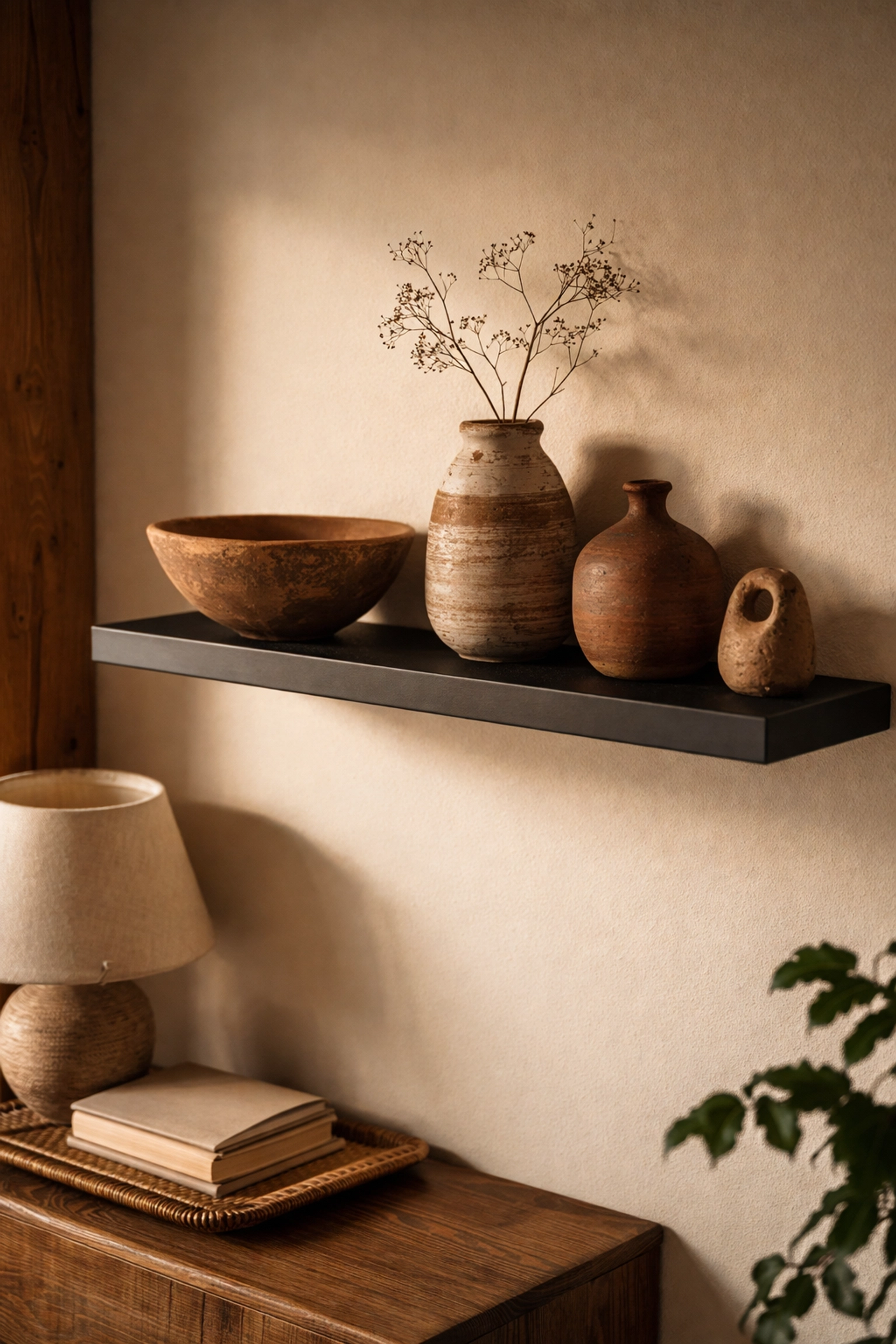
- A modern, sleek store-bought shelf paired with rustic handmade ceramic vessels
- A contemporary metal light fixture positioned above a handcrafted wooden side table
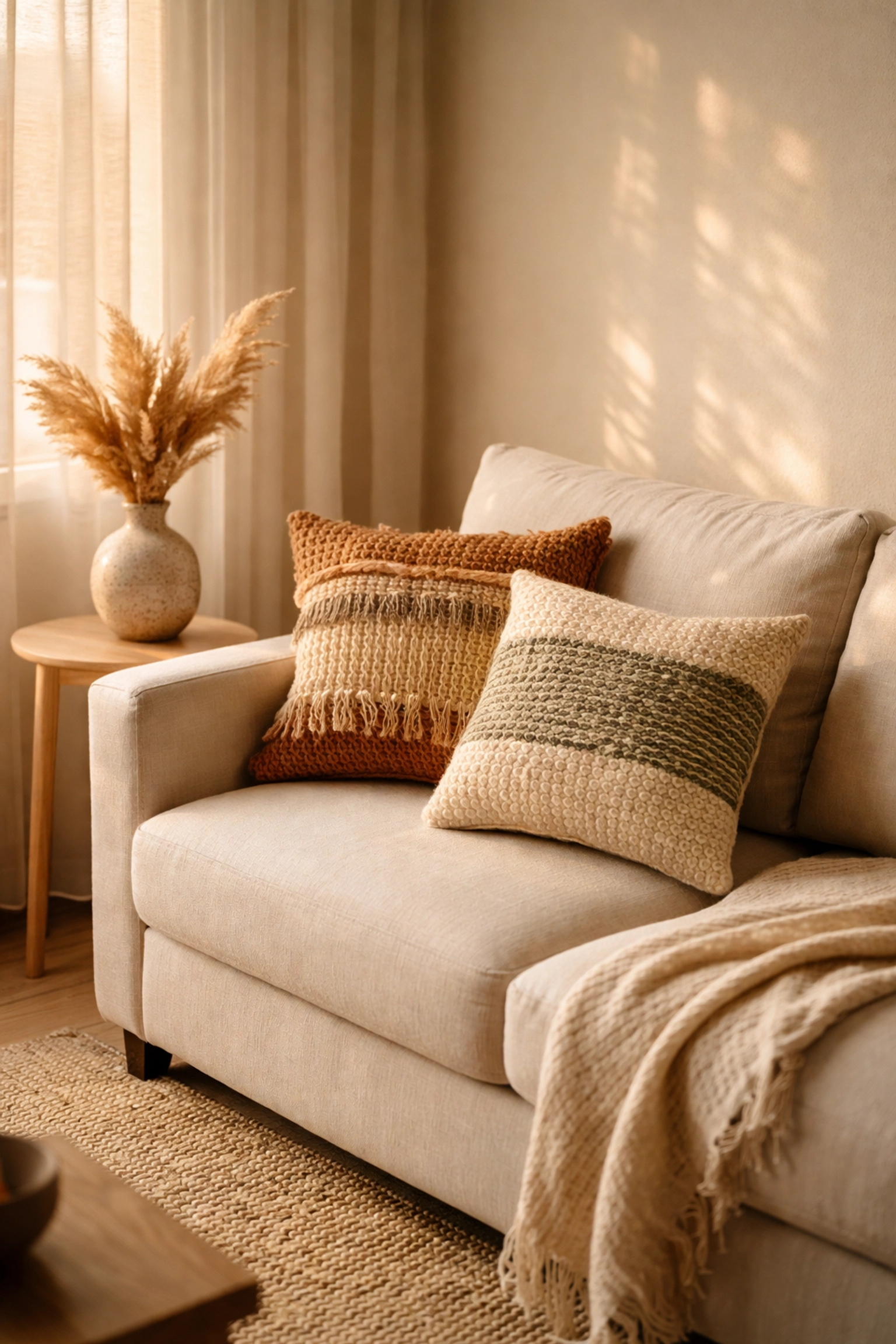
- Smooth, machine-made throw pillows arranged alongside hand-knitted or hand-woven textiles
- Mass-produced glass vases displayed near hand-thrown pottery pieces
The principle at work here involves leveraging the inherent differences between handmade and manufactured items: the slight imperfections, the organic variations, the evidence of human touch: as design assets rather than inconsistencies to be minimized.
The Gradual Approach: Building Your Collection Over Time
Perhaps the most common mistake made by homeowners attempting to mix handmade and store-bought decor involves the tendency to acquire too many pieces too quickly. This approach, however well-intentioned, frequently results in spaces that feel overstuffed and visually overwhelming rather than thoughtfully curated.
The recommended alternative involves beginning with one or two handmade pieces and observing how they interact with your existing store-bought items over a period of weeks or even months. This measured approach provides adequate time to assess balance, identify areas that might benefit from additional handmade elements, and recognize when a space has reached its optimal capacity.
Furthermore, finding or creating meaningful handmade pieces naturally takes time, and this inherent pacing helps maintain the intentionality that distinguishes a well-designed space from a cluttered one. The country living collection at Copper & Hazel Boutique, for example, offers pieces that can be integrated gradually into existing decor schemes without overwhelming the overall composition.
Practical Application: Room-by-Room Considerations
The principles outlined above apply universally, though their specific implementation may vary depending on the function and characteristics of individual rooms. Living areas, which typically serve as primary gathering spaces, often benefit from slightly higher concentrations of handmade accent pieces: particularly in the form of throw pillows, blankets, and decorative objects displayed on coffee tables or mantels.
Bedrooms, by contrast, frequently function most effectively when handmade elements are limited to a few carefully chosen pieces: perhaps a handcrafted quilt, a piece of original artwork above the headboard, or a set of handmade ceramic lamps on nightstands.
Kitchens and bathrooms present unique challenges due to their functional requirements, yet even these spaces can accommodate handmade elements in the form of pottery for soap dishes, hand-thrown vases for fresh herbs, or artisan-crafted towel holders.
Final Considerations for Achieving Balance
The successful integration of handmade home decor with store-bought pieces ultimately depends upon maintaining a clear sense of intention throughout the decorating process. Every piece, whether handcrafted by an artisan or produced in a factory, should earn its place within your home through its contribution to the overall aesthetic vision you have established.
Remember that empty space possesses its own value within interior design. The areas between and around your decorative objects allow individual pieces to be appreciated on their own merits while contributing to a sense of calm and order that cluttered spaces inherently lack.
By applying the 80/20 rule, reserving handmade pieces for accessories and art, maintaining a unified color palette, creating textural contrast, and building your collection gradually over time, you will discover that the combination of handmade and store-bought decor need not result in visual chaos but can instead produce a living environment that feels both personally meaningful and aesthetically harmonious.
🔖 Tags: handmade home decor, interior design tips, home styling, artisan decor, decluttering, mixing decor styles, home accessories
Leave a Comment
We would love to hear your thoughts on mixing handmade and store-bought decor in your own home.
Name (required)
Email (required, will not be published)
Comment