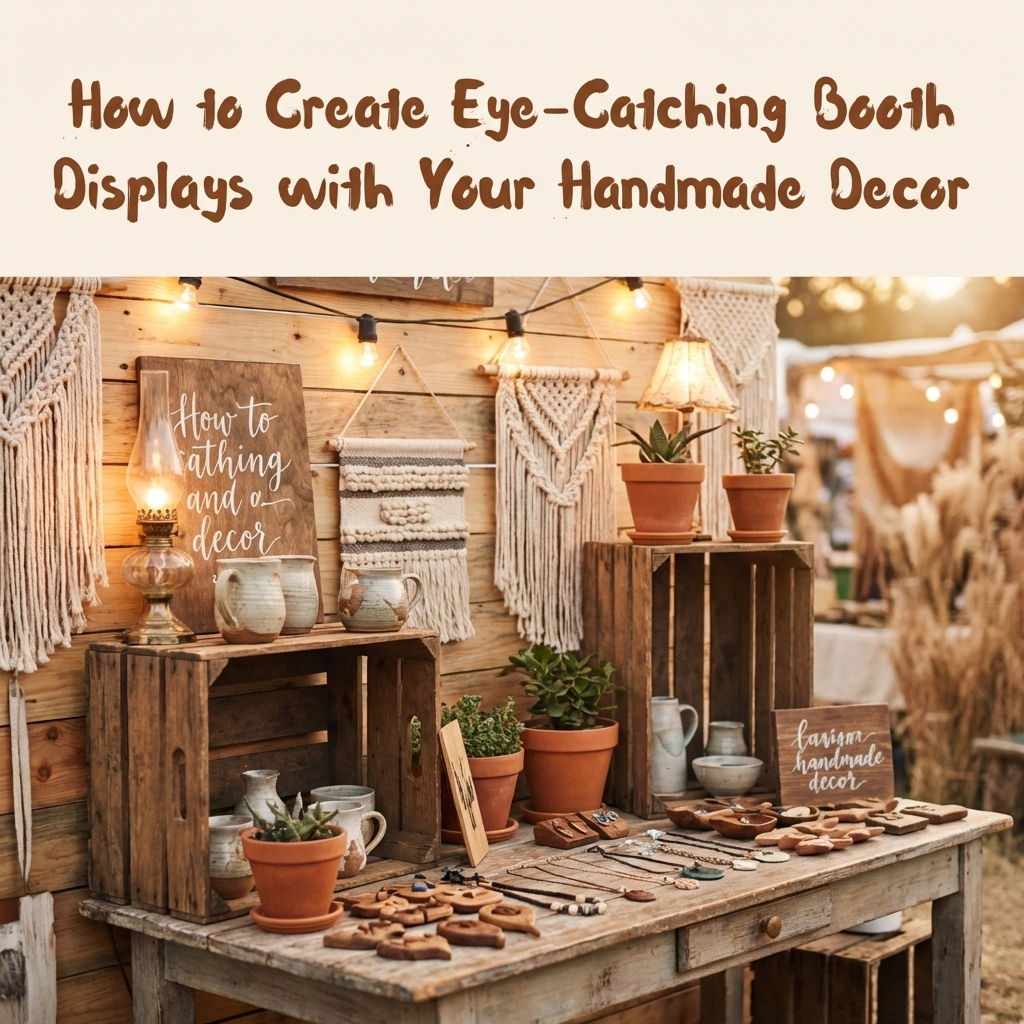

The art of presenting handmade decor at craft shows and artisan markets represents a crucial intersection of visual merchandising principles and creative expression, one that can fundamentally determine the commercial success of your booth. Creating an eye-catching booth display is not merely about arranging products on a table; rather, it encompasses a comprehensive understanding of spatial dynamics, customer psychology, and the strategic deployment of visual elements that collectively work to attract, engage, and ultimately convert browsing attendees into satisfied customers.
Whether you are a seasoned craft show veteran or preparing for your inaugural market appearance, the principles outlined in this comprehensive guide will provide you with the foundational knowledge necessary to transform your booth from an ordinary product presentation into a memorable shopping destination that captures attention and communicates the unique value of your handcrafted offerings.
Understanding the Fundamental Principles of Visual Merchandising
Before delving into specific techniques and strategies, it is essential to establish a foundational understanding of why booth displays matter in the context of craft shows and artisan markets. The human visual system is inherently drawn to displays that offer variety, depth, and visual interest, which means that a well-designed booth will naturally attract more foot traffic than one that presents products in a flat, uninspired manner.
The primary objective of any booth display is to maximize visibility while simultaneously creating an inviting atmosphere that encourages customers to engage with your products. This dual objective requires careful consideration of multiple factors, including height variation, thematic coherence, spatial arrangement, and the strategic placement of individual items within the overall display framework.
The Critical Importance of Varying Heights in Your Display
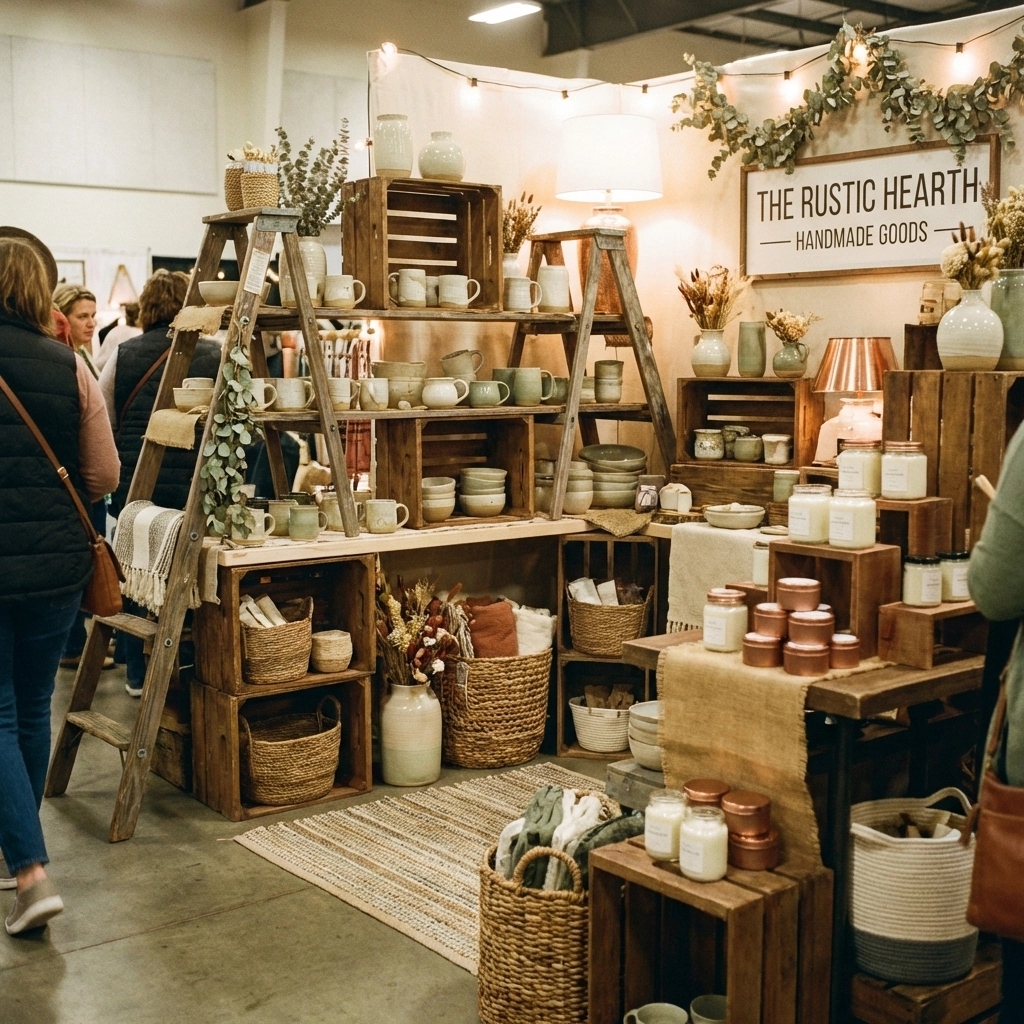
Perhaps the most essential technique in creating an eye-catching booth display involves the deliberate creation of different levels and heights throughout your presentation space. Rather than positioning items in a flat arrangement across your table surface (a common mistake among novice vendors), you should actively seek to elevate products at varying heights to create contrast, depth, and dimensional interest that draws the eye from a considerable distance.
"The difference between a successful booth and one that gets passed by often comes down to whether customers can actually see your products from the aisle." - Sarah M., Craft Show Coordinator
There are numerous practical methods for achieving height variation in your display, and many of these solutions can be accomplished using readily available and inexpensive materials. Upside-down boxes, wooden crates, tiered shelving units, decorative bowls, magazine files, and even vintage ladders can serve as effective platforms for elevating products to different levels. Additionally, cake stands, easels, pegboards, and hanging systems offer vertical display options that maximize your booth's three-dimensional potential.
When utilizing boxes or other makeshift platforms, it is advisable to cover these elements with fabric (preferably matching your tablecloth) to maintain a polished, professional appearance that aligns with your overall brand aesthetic. The goal is to create the impression of an intentionally designed display rather than a haphazard arrangement of products on improvised surfaces.
Selecting and Implementing a Coherent Theme
The selection of a coherent theme for your booth display serves multiple important functions, including the unification of disparate visual elements, the creation of a memorable customer experience, and the clear communication of your brand identity. A well-executed theme helps customers understand who you are as a maker and what distinguishes your handcrafted offerings from those of competing vendors.
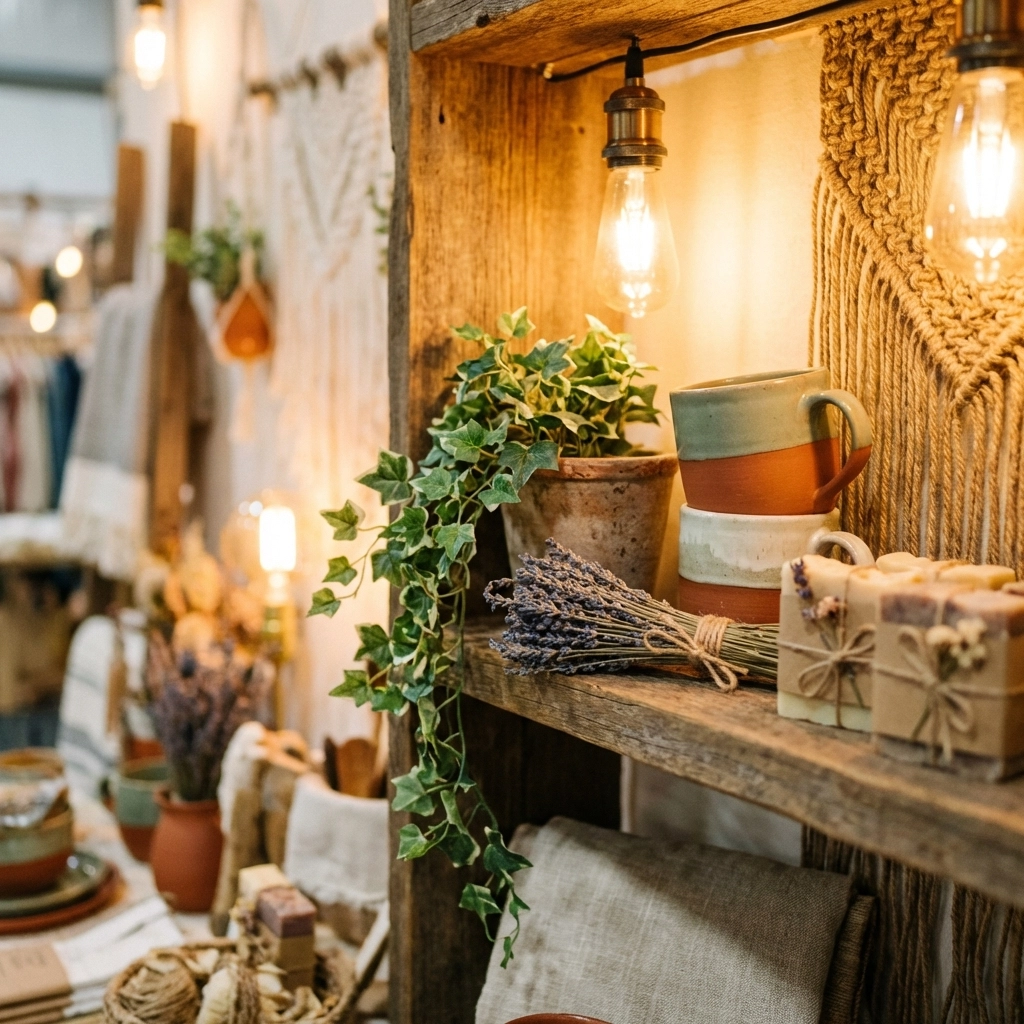
Popular thematic options that work particularly well for handmade decor include rustic farmhouse aesthetics, vintage or antique-inspired presentations, tropical or botanical themes, bohemian or eclectic arrangements, and seasonal or holiday-specific decorations. The theme you select should ideally complement the style and character of your handcrafted products while also reflecting your personal brand identity.
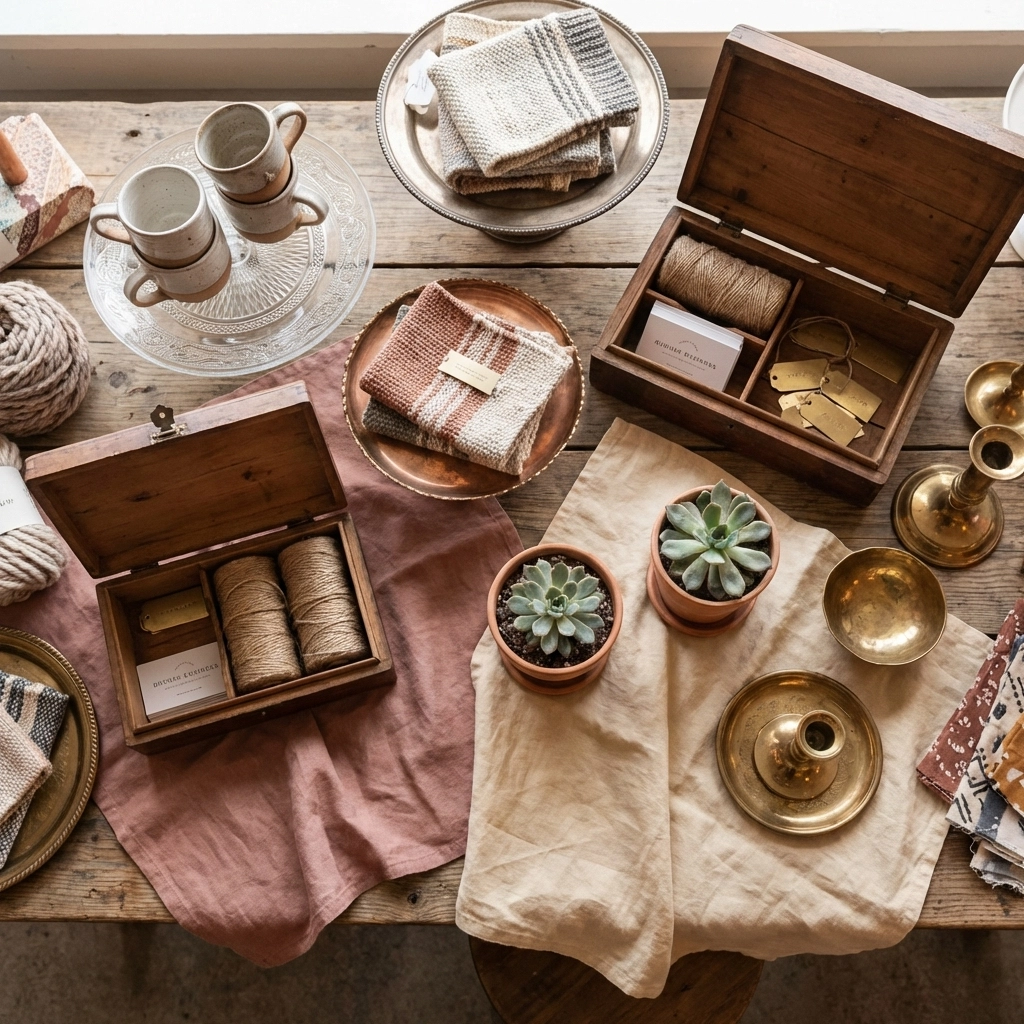
Once you have established your theme, consistency becomes paramount. Your color palette, props, decorative accessories, signage, and even your tablecloth should all work together to reinforce the chosen aesthetic. Signs, banners, and product labels should be designed to communicate your theme clearly while simultaneously providing essential information about your business and products.
Strategic Booth Layout Considerations
The physical arrangement of your booth space significantly impacts customer flow, product visibility, and overall sales performance. Different layout configurations offer distinct advantages depending on your booth location, the nature of your products, and the specific dynamics of the event venue.
The U-shaped layout represents one of the most effective configurations for craft show booths, as it positions products at the front and along both sides of your space, thereby maximizing visibility to attendees walking past in the aisle. This layout creates a welcoming alcove that naturally draws customers into your display area while ensuring that your products remain visible from multiple angles.
For vendors positioned in corner locations, the inverted U-shaped layout often proves more effective, as it encourages customers to step closer for a more detailed examination of your offerings. Regardless of which layout configuration you select, vertical displays should lift products to heights where they remain visible from a distance, ensuring that your booth captures attention even amid the visual competition of a crowded market environment.
Incorporating Decorative Elements for Enhanced Visual Appeal
The strategic incorporation of small decorative elements throughout your display can elevate your presentation from merely functional to genuinely memorable. Decorative accents such as artificial plants, sprigs of seasonal greenery, vintage props, or thematically appropriate accessories create the impression of a curated boutique experience rather than a simple product display.
These decorative elements should complement rather than overwhelm your actual products, serving to enhance visual interest without distracting from the handcrafted items you are attempting to sell. The goal is to create an aesthetically cohesive environment that invites customers to linger, explore, and ultimately make purchases.
Signage and Branding Essentials
Effective signage serves as a silent salesperson for your booth, communicating essential information about your business, products, and pricing even when you are occupied with other customers. Your primary business sign should be prominently displayed, clearly visible from the aisle, and designed to reflect your brand identity and chosen theme.
Price tags and product labels should be consistent in their design, easy to read, and positioned where customers can access them without difficulty. Consider including brief descriptions or stories about your handcrafted items, as these narratives often resonate with customers who value the artisan process and the human connection behind handmade products.
For additional inspiration on creating distinctive handmade pieces that stand out at craft shows, you might explore our guide on 25 creative unique handmade gifts you've never thought of.
Practical Tips for Implementation
As you prepare for your next craft show or artisan market, consider the following practical recommendations for implementing the principles discussed throughout this guide:
First, invest in quality table coverings that coordinate with your chosen theme and provide a professional foundation for your display. Second, practice setting up your booth at home before the event, timing yourself and photographing the results from various angles to identify areas for improvement. Third, bring backup supplies and display materials in case of unexpected situations or last-minute adjustments.
Additionally, ensure that your most distinctive or best-selling items occupy prominent positions within your display hierarchy, and consider how natural and artificial lighting conditions at the venue might affect the visibility and presentation of your products.
Conclusion
Creating an eye-catching booth display with your handmade decor requires a thoughtful combination of visual merchandising principles, thematic coherence, and strategic spatial arrangement. By varying heights throughout your display, selecting and implementing a coherent theme, choosing an appropriate booth layout, and incorporating decorative elements that enhance rather than distract from your products, you can transform your craft show presence into a memorable shopping destination that attracts customers and drives sales.
The investment of time and effort in developing an exceptional booth display ultimately reflects your commitment to your craft and your respect for the customers who appreciate handmade artistry.
🔖 Tags: craft show tips, booth display ideas, handmade decor, artisan markets, visual merchandising, craft fair setup
Leave a Comment
Your email address will not be published. Required fields are marked *
Name *
Email *
Comment *