

The desire to connect with the natural world represents one of the most fundamental aspects of human psychology, and yet modern living conditions often create significant barriers between ourselves and the outdoor environments we instinctively crave. The concept of biophilic design: that is, the practice of incorporating natural elements into interior spaces: has gained considerable traction among interior designers and homeowners alike, though many individuals mistakenly believe that achieving this aesthetic requires the cultivation and maintenance of living plants. This assumption, while understandable, overlooks the remarkable potential of handcrafted home accessories to bring the essence of nature indoors without demanding the horticultural expertise that houseplants inevitably require.
For those who have experienced the disappointment of watching a beloved fern wither despite their best efforts (or perhaps because of them), the prospect of creating a nature-inspired interior through artisan home decor offers a genuinely liberating alternative. The following exploration examines the various methods, materials, and design principles that enable homeowners to establish meaningful connections with the natural world through carefully selected handcrafted pieces.
Understanding the Foundation: Natural Fiber Textiles and Earth-Toned Palettes
The establishment of a nature-inspired interior begins not with decorative accessories themselves, but rather with the foundational elements that anchor and define the space. Natural fiber rugs crafted from materials such as sisal, jute, seagrass, or hemp provide both visual and tactile connections to the organic world, and these textiles serve as the groundwork upon which additional handcrafted home accessories can be thoughtfully layered.
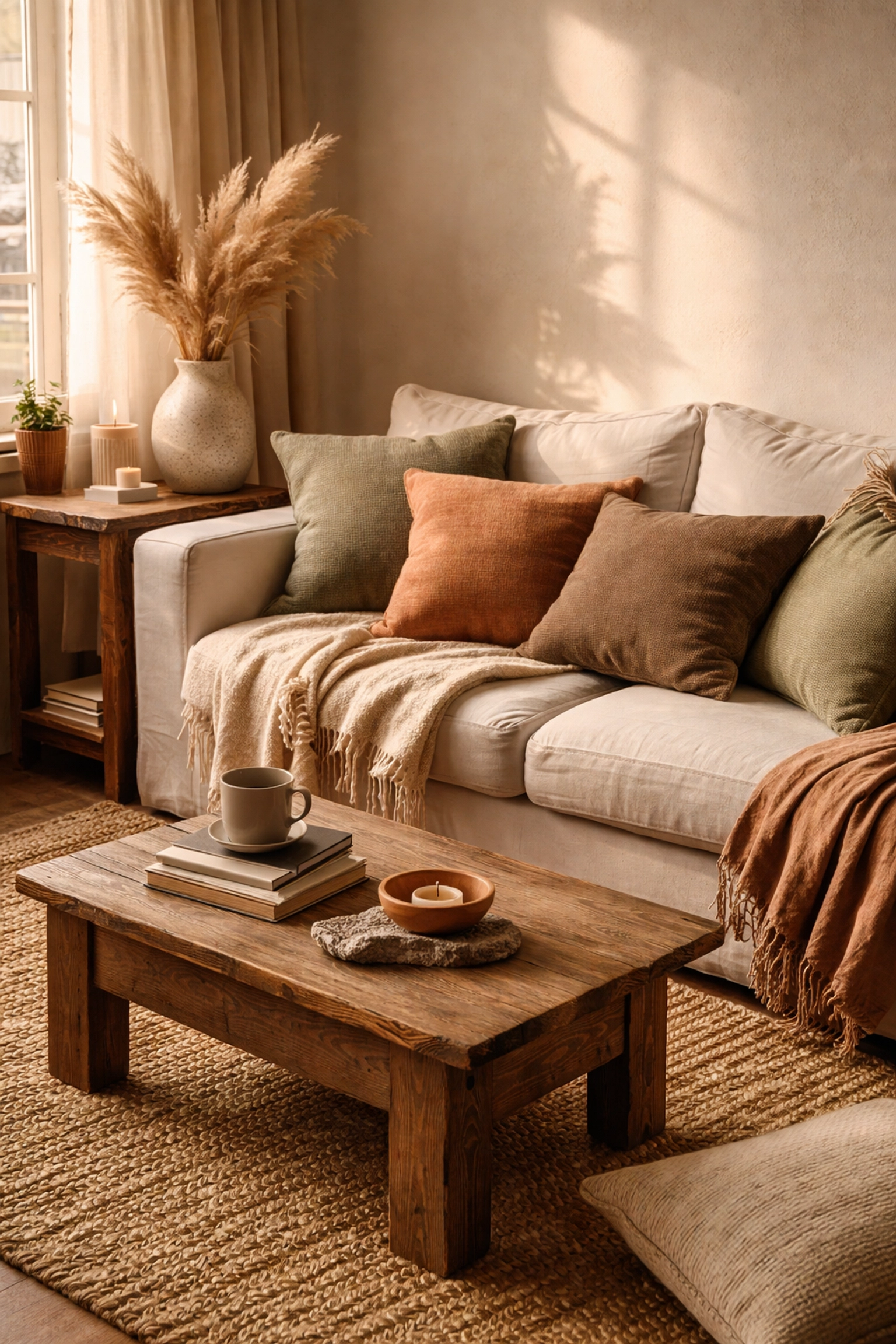
The selection of an earth-toned color scheme represents another essential consideration in this design approach. Colors drawn directly from natural landscapes: the blues of coastal waters, the greens of forest canopies, the browns of mountain terrain: create an immediate atmospheric shift that prepares the space for nature-inspired accessories. When choosing artisan home decor pieces, one should consider how their colors complement this established palette, as coherence between foundational elements and decorative objects significantly enhances the overall naturalistic effect.
"The most successful nature-inspired interiors are those where every element feels intentionally connected to a specific landscape or ecosystem, rather than randomly assembled from disparate sources." - Interior Design Quarterly
The Art of Collected Objects: Displaying Nature's Found Treasures
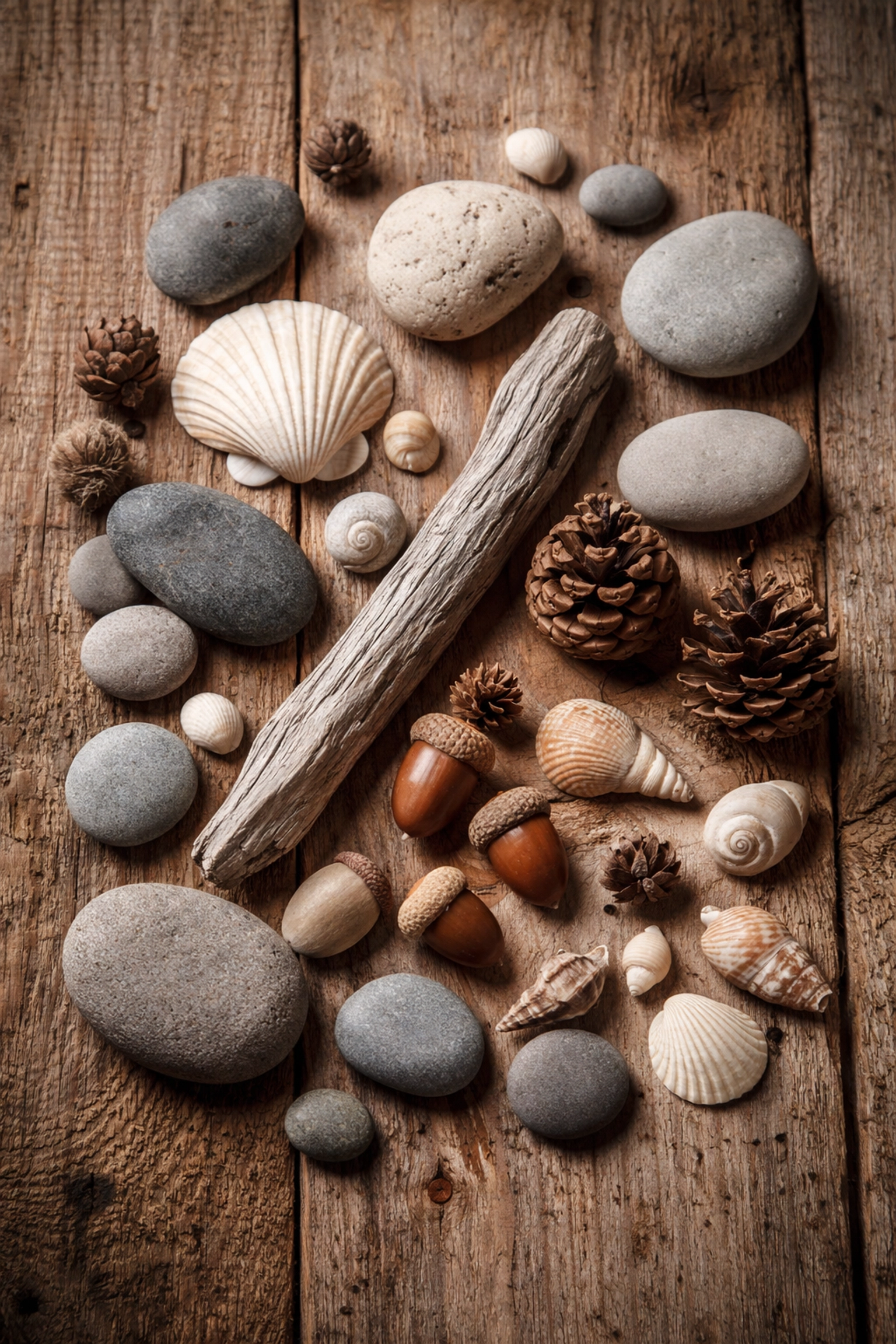
One of the most authentic methods for bringing nature indoors involves the collection and display of natural objects gathered during outdoor excursions. This practice transforms ordinary walks through forests, along beaches, or across meadows into opportunities for sourcing meaningful decorative materials that carry personal significance alongside their aesthetic value.
Items worthy of collection and display include (but are certainly not limited to) the following categories:
- Seashells and sea glass polished by oceanic forces
- Driftwood and branches shaped by water and wind
- River rocks, pebbles, and smooth stones
- Pine cones, acorns, and various seed pods
- Bark fragments from naturally fallen timber
The arrangement of these collected objects requires thoughtful consideration, as the manner of display significantly impacts their visual effectiveness. Design experts consistently recommend clustering natural objects together as focal points rather than scattering them throughout a room, since concentrated groupings create more powerful visual statements and prevent the space from appearing cluttered or disorganized.
Handcrafted Accessories From Natural Materials
Beyond the display of found objects in their unaltered states, the transformation of natural materials into functional handcrafted home accessories represents a particularly compelling approach to nature-inspired interior design. Artisan home decor pieces that incorporate organic materials offer the dual benefits of aesthetic appeal and practical utility, thereby justifying their presence in the home on multiple grounds.
River rocks and smoothed stones, for example, can be fashioned into decorative bowls, candle holders, or even functional items such as coasters and trivets. Branches and twigs collected during woodland walks become wall hangings, curtain rods, or sculptural coat racks when treated by skilled craftspeople. These transformations honor the inherent beauty of natural materials while elevating them into objects worthy of interior placement.
The practice of leaf and flower pressing: wherein botanical specimens are carefully dried between weighted pages before being framed as wall art: captures the delicate essence of nature in a form that requires no ongoing care or attention. Such pieces, particularly when crafted by artisans who understand the technical requirements of proper preservation, can maintain their beauty for years or even decades without deterioration.
Botanical Imagery Without Living Plants
For those who appreciate the visual qualities of plant life but cannot (or prefer not to) maintain living specimens, botanical prints and floral patterns offer an excellent alternative pathway to nature-inspired interior design. These representations of plant life appear across numerous categories of handcrafted home accessories, including framed artwork, decorative textiles, ceramic pieces, and carved wooden objects.
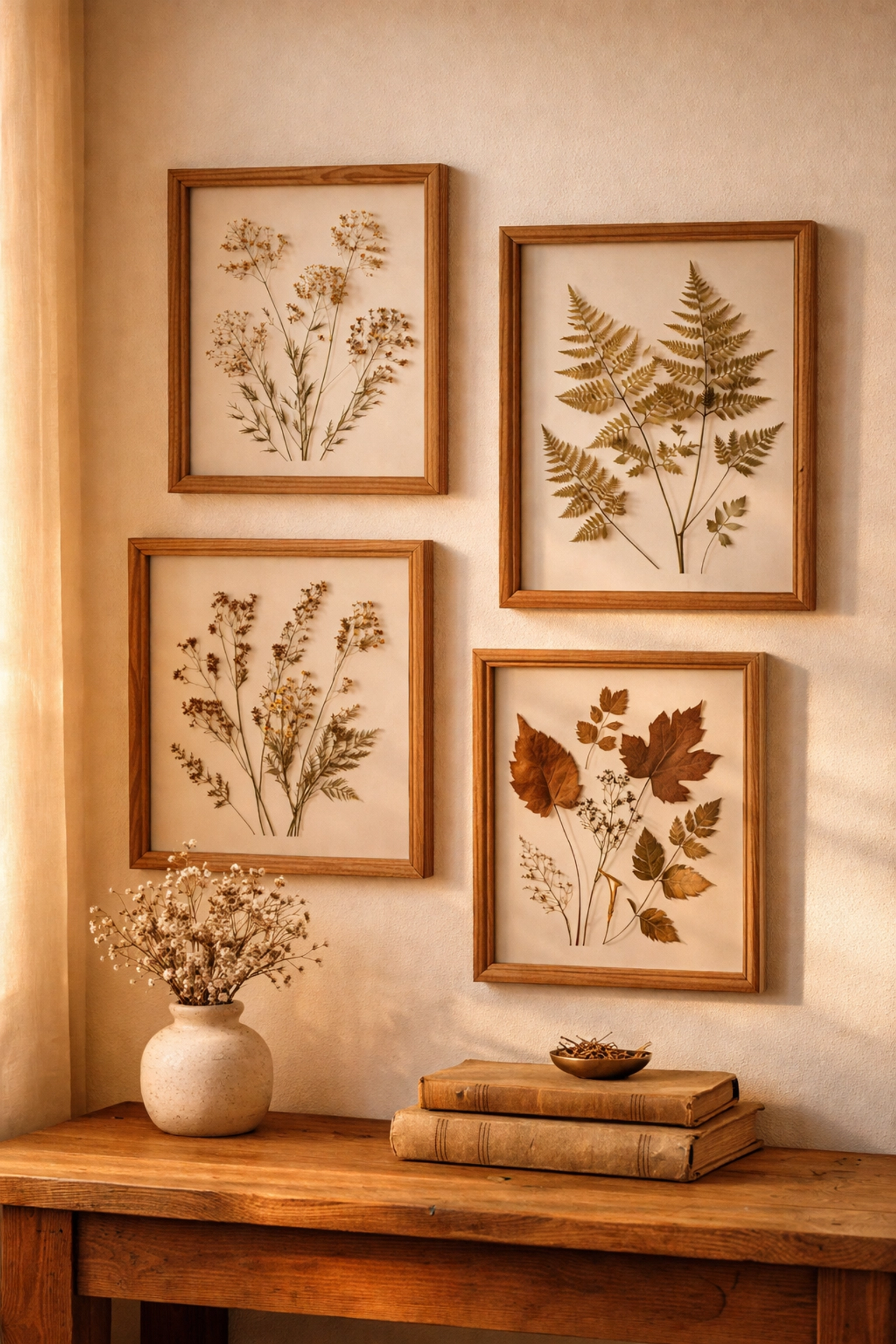
The selection of botanical imagery for interior spaces should be guided by considerations of scale, color harmony, and thematic consistency. A single large-format botanical print, for instance, can serve as a room's primary focal point, while smaller coordinated pieces distributed throughout the space create visual rhythm and reinforce the naturalistic theme. The framed art collection at Copper & Hazel Boutique exemplifies this approach, offering pieces that bring botanical beauty into homes without the complications of plant maintenance.
Wood, Ceramic, and Woven Elements in Artisan Home Decor
The material composition of handcrafted home accessories plays a crucial role in establishing authentic connections to the natural world. Objects fashioned from wood retain the organic character of their source material through visible grain patterns, natural color variations, and the warm tactile qualities that distinguish genuine timber from synthetic alternatives.
Ceramic pieces crafted by artisan makers often incorporate glazes and finishes that reference natural phenomena: the blue-green of oxidized copper, the earthy tones of unglazed terracotta, the subtle variations found in stone surfaces. These handcrafted home accessories contribute to nature-inspired interiors not through literal botanical representation, but rather through their embodiment of organic processes and natural material qualities.
Woven baskets, macramé wall hangings, and textiles created from natural fibers similarly connect interior spaces to the broader natural world. The visible evidence of handcraft in these objects: the slight irregularities, the variations in tension and texture: distinguishes them from mass-produced alternatives and reinforces the organic, imperfect beauty that characterizes natural environments.
Practical Implementation: Creating Cohesive Nature-Inspired Spaces
The successful integration of nature-inspired handcrafted home accessories requires attention to spatial distribution, visual balance, and thematic coherence. Rather than acquiring numerous pieces simultaneously, many design professionals recommend a gradual accumulation approach wherein objects are added thoughtfully over time as opportunities for meaningful acquisition present themselves.
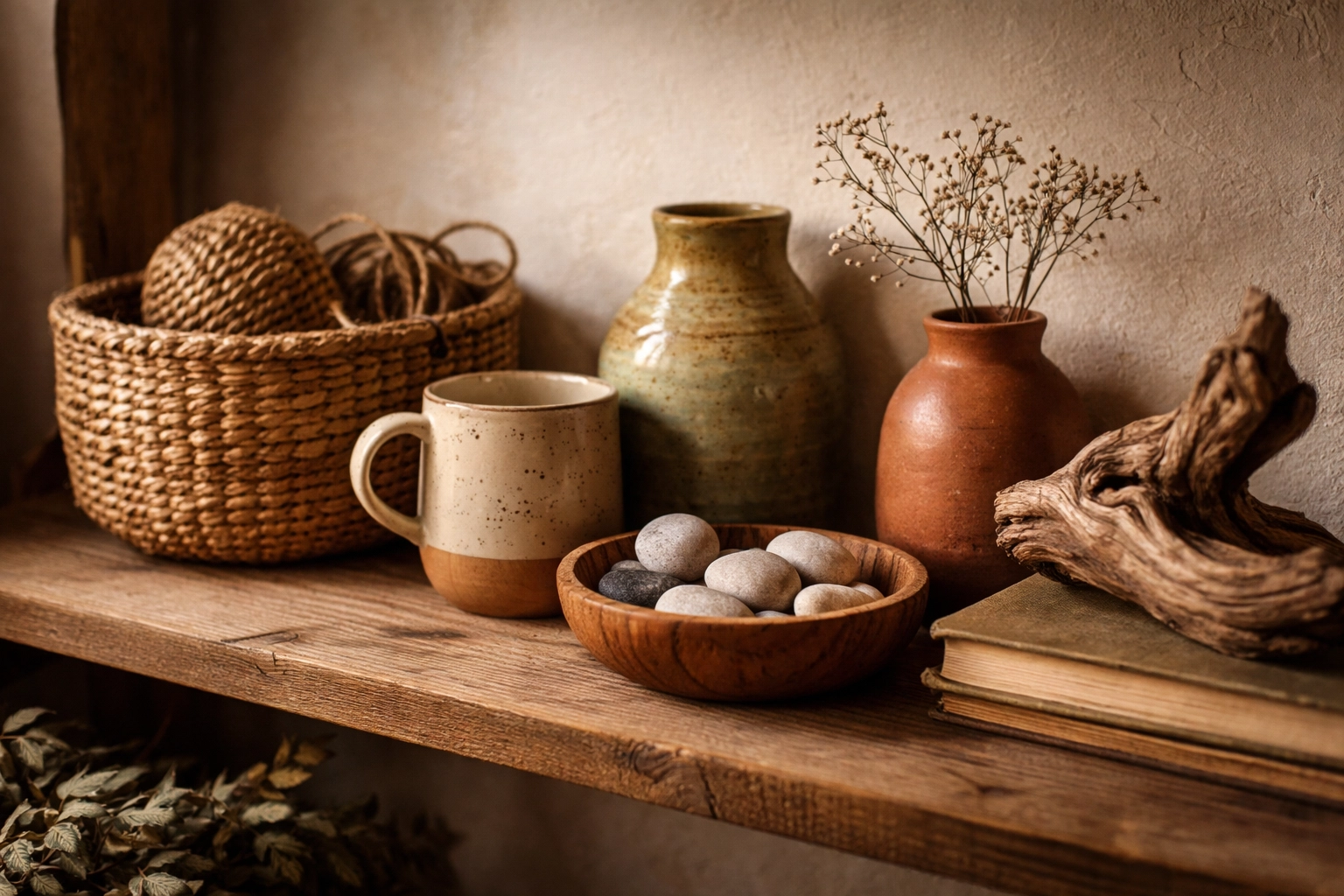
When visiting our shop, consider how potential acquisitions might complement existing pieces and contribute to an overall design narrative. The most effective nature-inspired interiors tell coherent stories about specific landscapes, seasons, or natural phenomena rather than presenting disconnected references to generic "nature" as an abstract concept.
The arrangement of artisan home decor within rooms should follow principles of visual hierarchy and focal point establishment. Primary pieces deserve prominent placement where they can be properly appreciated, while supporting accessories fill secondary positions that enhance rather than compete with central elements.
The Enduring Appeal of Nature-Inspired Interiors
The incorporation of natural elements into domestic spaces through handcrafted home accessories satisfies deep psychological needs for connection with the organic world: needs that modern urban and suburban living conditions frequently leave unfulfilled. Unlike the anxiety-inducing responsibilities associated with living plant care, artisan home decor pieces require only occasional dusting and offer their nature-connecting benefits without demanding ongoing attention or expertise.
The investment in quality handcrafted pieces, rather than mass-produced alternatives, further enhances the authenticity of nature-inspired interiors. Objects created by skilled artisans carry the energy of human creativity alongside their natural material qualities, resulting in accessories that feel genuinely meaningful rather than merely decorative.
For those seeking to transform their living spaces into nature-inspired sanctuaries without accepting the responsibilities of plant parenthood, the world of handcrafted home accessories offers abundant possibilities waiting to be explored.
🔖 Tags: handcrafted home accessories, artisan home decor, nature-inspired interior design, botanical decor, natural materials, home styling
Leave a Comment
Your email address will not be published. Required fields are marked *
Name* _______________
Email* _______________
Comment* _______________
[ ] Save my name, email, and website in this browser for the next time I comment.
[Post Comment]