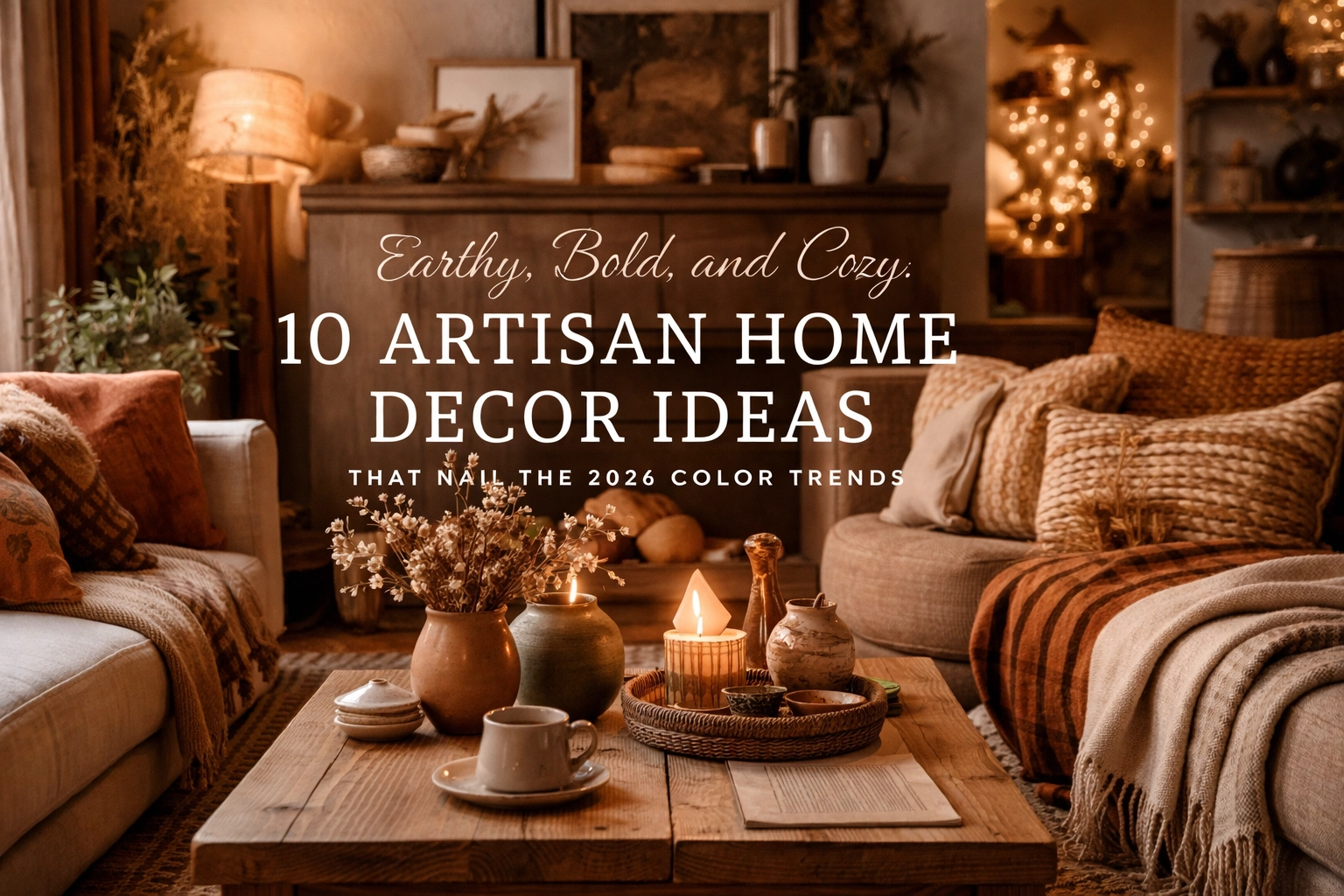

The trajectory of interior design in 2026 represents a significant departure from the cold, neutral-heavy aesthetics that dominated residential spaces throughout the early 2020s. Design experts and color forecasters have observed a collective movement toward warm, earthy tones paired with bold accent colors: a shift that fundamentally prioritizes personal expression and authentic warmth over resale-focused decorating choices. This evolution in color preference creates an ideal environment for handcrafted and artisan pieces, which naturally embody the textural richness and organic authenticity that contemporary homeowners increasingly seek.
The following examination presents ten artisan home decor concepts that align seamlessly with the 2026 color trends, offering practical approaches for those who wish to incorporate handmade elements into their living spaces while remaining aesthetically current.
1. Handwoven Baskets in Forest Green and Earthy Neutrals
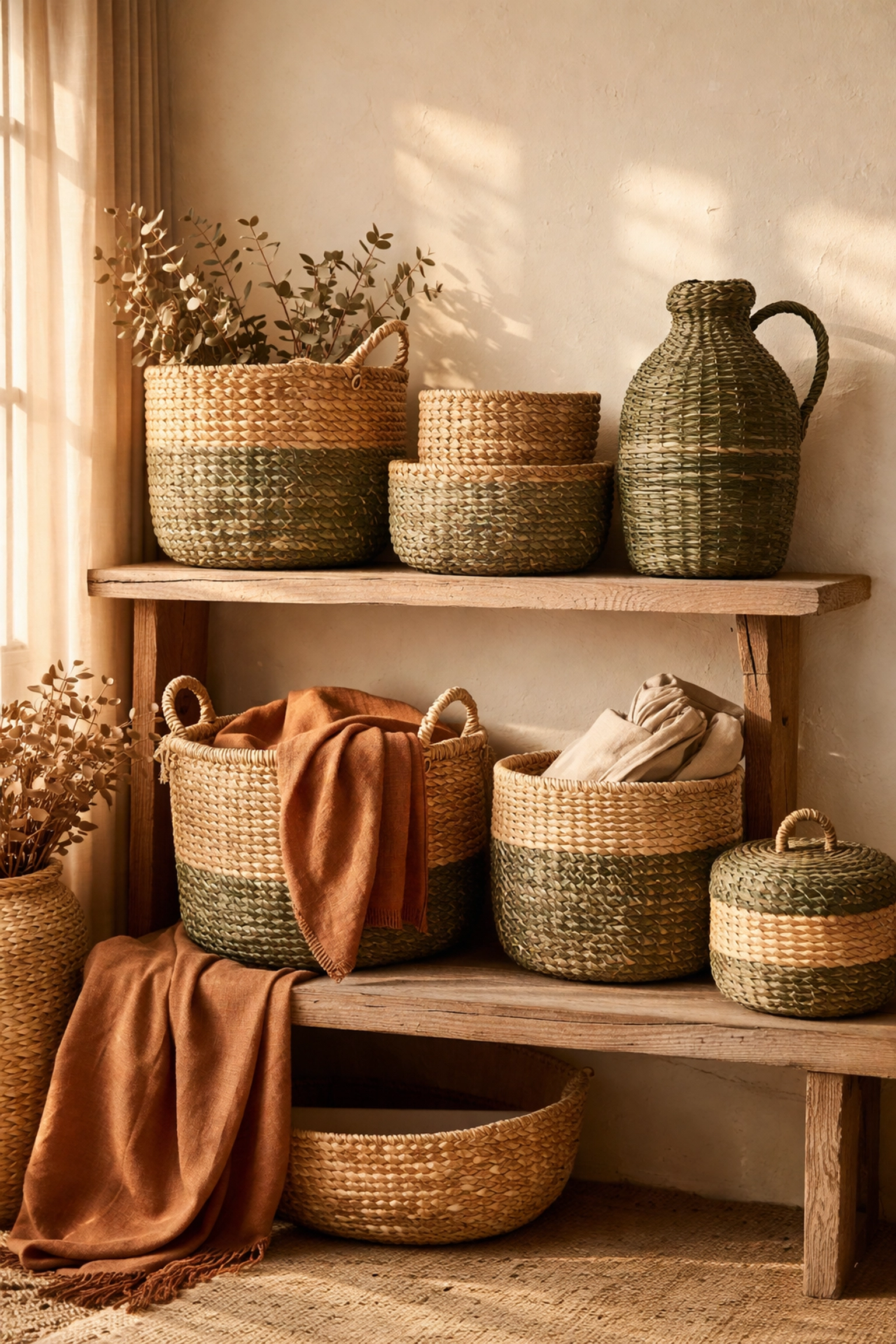
The integration of handwoven baskets into contemporary interiors serves both functional and aesthetic purposes, particularly when these pieces feature the forest greens and sandy neutrals that dominate the 2026 palette. Woven baskets crafted from natural materials such as seagrass, jute, or rattan possess an inherent warmth that mass-produced alternatives simply cannot replicate. The irregularities present in handwoven construction: subtle variations in weave density, organic color gradations, and natural fiber textures: contribute to an authenticity that resonates with the current design ethos.
These pieces function exceptionally well as storage solutions while simultaneously serving as decorative elements. A green basket placed strategically in a living area or bedroom introduces both the earthy color notes trending in 2026 and the handcrafted quality that elevates ordinary spaces into curated environments.
2. Artisan Wall Hangings with Botanical Motifs
The vertical plane of interior spaces: often neglected in favor of furniture and floor-level accessories: presents substantial opportunities for incorporating the 2026 color palette through artisan wall decor. Handcrafted wall hangings featuring botanical motifs, floral arrangements, or nature-inspired designs align perfectly with the movement toward organic aesthetics and warm, grounded color schemes.
Such pieces, particularly those executed in burnt umber, soft khaki, or muted green tones, function as focal points that anchor entire rooms while introducing the textural dimension that contemporary interiors require. A thoughtfully selected flower wall hanging demonstrates how artisan craftsmanship can translate trend-appropriate colors into permanent design elements.
3. Hand-Painted Artwork Featuring Pastoral Subjects
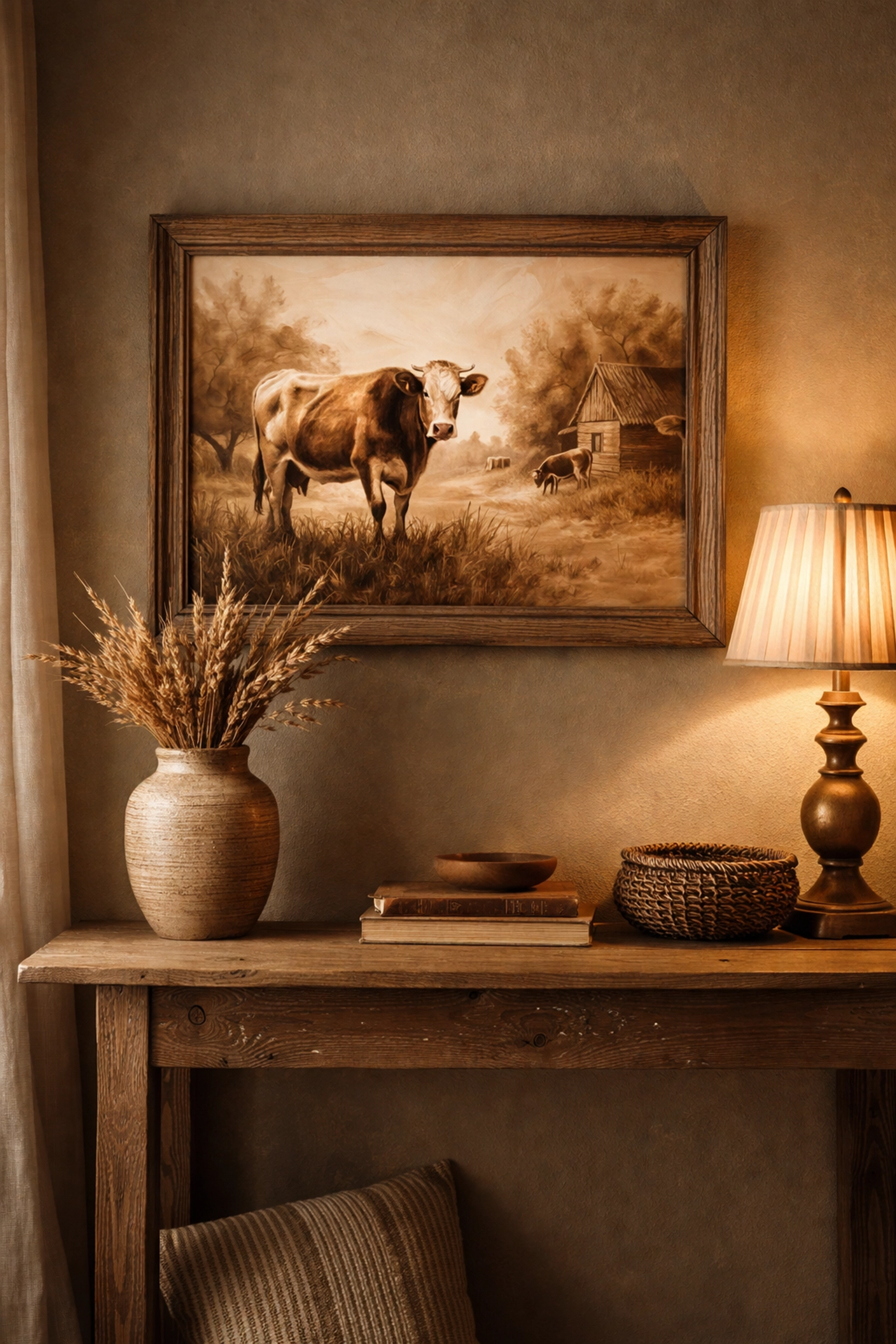
The 2026 design landscape emphasizes connection to nature, nostalgia, and warmth: qualities abundantly present in hand-painted artwork depicting pastoral or agricultural subjects. Pieces featuring farm animals, rural landscapes, or country-inspired imagery carry inherent warmth while naturally incorporating the burnt caramel, sepia, and earthy brown tones currently favored by design professionals.
"The handmade quality of artisan paintings adds character that printed reproductions cannot achieve. Each brushstroke contains intention." - Sarah M., Interior Stylist
Original or limited-edition artisan paintings, such as a cow painting rendered in warm tones, introduce both visual interest and the authentic, personal quality that distinguishes thoughtfully curated homes from generic interiors.
4. Vintage-Inspired Tin Signage in Warm Metallics
The incorporation of vintage-inspired tin signage represents a design approach that satisfies multiple 2026 trends simultaneously. These pieces typically feature warm metallic undertones: aged brass, copper patina, and oxidized bronze: while their nostalgic aesthetic aligns with the broader movement away from cold, contemporary minimalism toward warmer, more personality-driven spaces.
Tin signs depicting agricultural themes, such as bee-themed or chicken-inspired imagery, introduce whimsy and warmth without overwhelming surrounding decor. The subtle imperfections characteristic of tin signage: minor dents, aged patina, weathered edges: contribute authenticity that synthetic alternatives cannot provide.
5. Handcrafted Ceramic Vessels in Burnt Umber and Charcoal
Artisanal ceramics have emerged as essential components of the 2026 interior palette, particularly when executed in burnt umber, charcoal, and warm terracotta tones. Hand-thrown pottery exhibits the subtle irregularities: fingerprints preserved in clay, organic variations in glaze application, asymmetrical forms: that distinguish authentic craftsmanship from factory production.
The placement of handcrafted ceramic vessels throughout living spaces introduces the moody, sophisticated character that designers associate with current trends. These pieces function effectively as standalone sculptural elements, as containers for dried botanical arrangements, or as utilitarian objects that elevate everyday activities into aesthetic experiences.
6. Woven Textiles in Monochromatic Color Schemes
The bold monochromatic design approach gaining prominence in 2026 finds natural expression through handwoven textiles that explore tonal variations within single color families. Artisan weavers create pieces that layer multiple shades: navy paired with powder blue and steel grey, for instance, or burnt orange graduating through terracotta to cream: generating visual complexity without chromatic chaos.
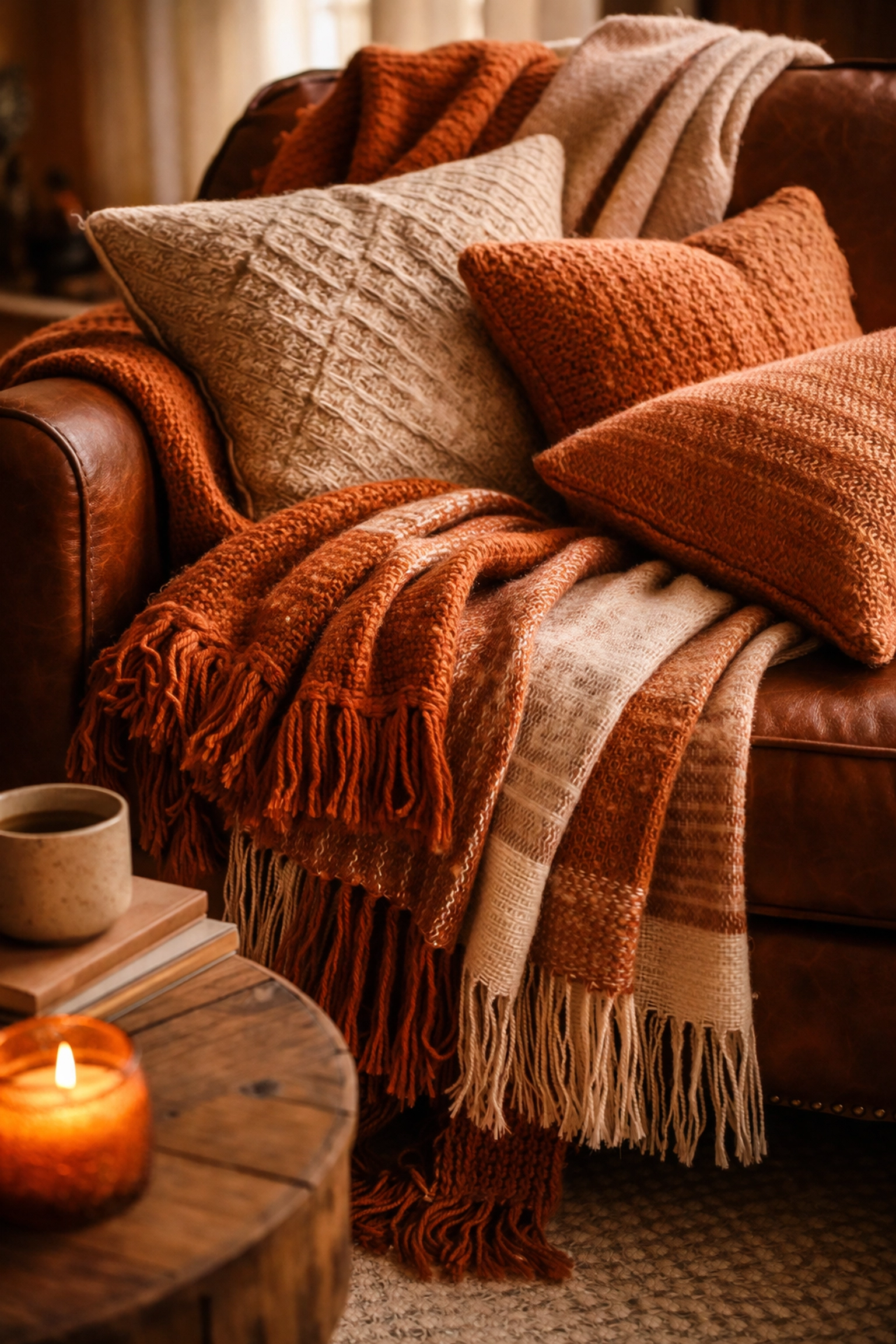
Handwoven throw blankets, pillow covers, and wall textiles executed in monochromatic schemes introduce texture and warmth while demonstrating sophisticated color understanding. The handmade nature of these pieces ensures that each item possesses unique character, even when multiple pieces share similar color palettes.
7. Artisan Brass Hardware and Accent Pieces
The 2026 emphasis on warm neutrals: cremèle tones, caramel shades, and sandy beiges: creates an ideal backdrop for handcrafted brass hardware and accent pieces. Artisan metalworkers produce items that differ substantially from mass-produced alternatives; hand-forged brass exhibits subtle hammer marks, natural variation in patina development, and organic forms that manufactured pieces cannot replicate.
Cabinet hardware, light fixtures, decorative objects, and functional accessories crafted from hand-finished brass introduce warmth and sophistication while connecting contemporary spaces to traditional craft practices that predate industrial manufacturing.
8. Hand-Dyed Textiles in Oxblood and Burgundy
The emergence of oxblood and burgundy as dominant accent colors in 2026 fashion and interiors presents opportunities for incorporating hand-dyed textiles into residential spaces. Natural dyeing processes: utilizing plant-based colorants, mineral pigments, or traditional indigo techniques: produce color results that synthetic dyes cannot achieve, including subtle gradations, organic variations, and depth that appears to shift under different lighting conditions.
Hand-dyed cushion covers, table linens, curtain panels, and upholstery fabrics in deep wine tones create statement pieces that command attention while maintaining the artisan authenticity central to current design preferences.
9. Artisanal Wood Pieces in Sepia and Chocolate Tones
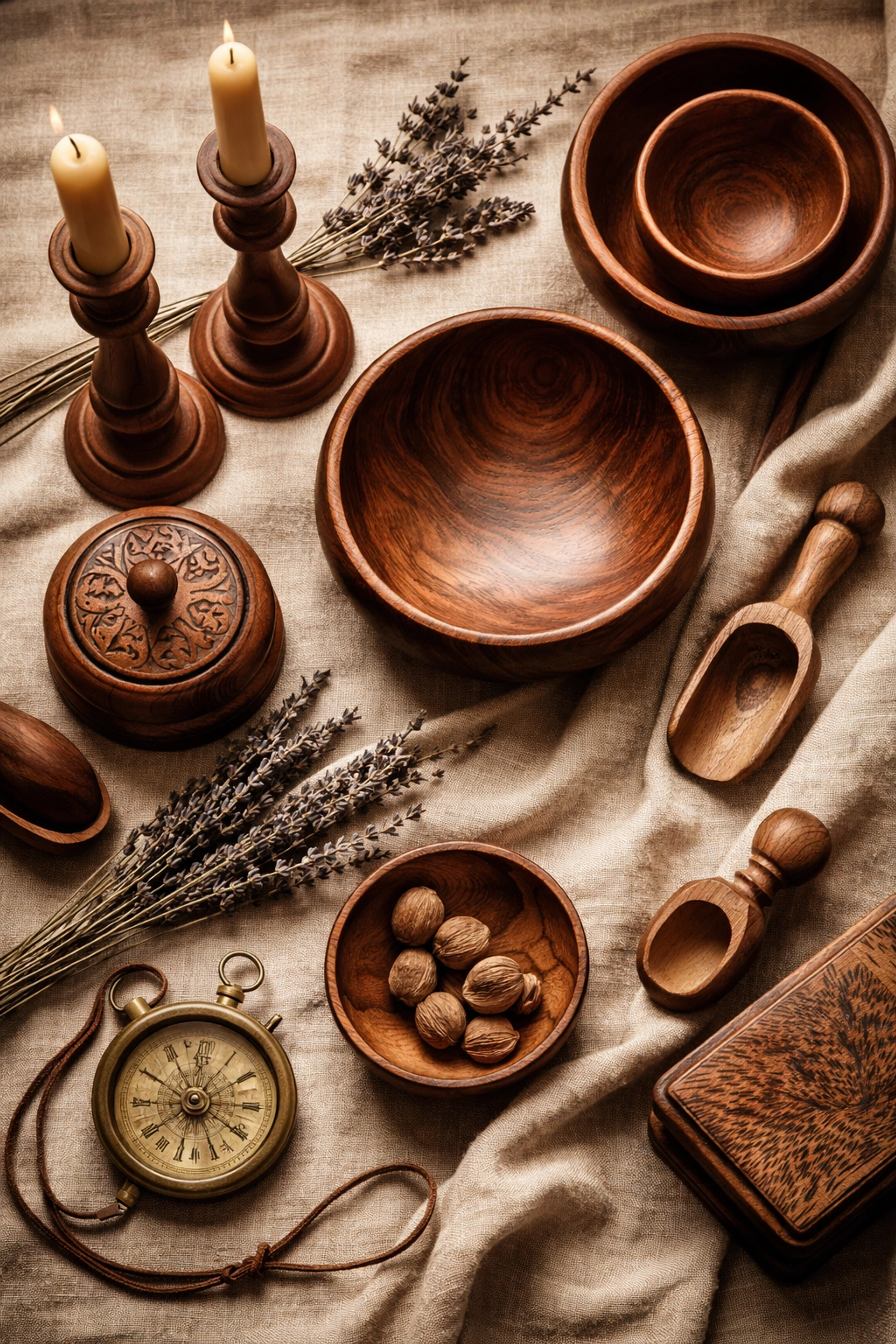
The movement away from cool greys and bleached woods toward warmer, darker wood tones represents a significant shift in 2026 interior preferences. Artisan woodworkers producing pieces in sepia, chocolate brown, and warm umber tones align perfectly with this transition, offering furniture and decorative objects that embody both warmth and sophistication.
Hand-finished wood pieces: whether functional furniture, decorative bowls, sculptural objects, or architectural elements: introduce organic warmth while showcasing traditional woodworking techniques. The natural variation present in hand-selected timber, combined with artisan finishing methods, ensures that each piece possesses unique character.
10. Handcrafted Decorative Dishes and Serving Pieces
Artisan dishware and decorative serving pieces represent a category where functional objects transcend utilitarian purposes to become decorative elements worthy of display. Hand-painted dishes, ceramic plates with nature-inspired motifs, and serving pieces executed in the warm, earthy tones of 2026 deserve prominent placement where their craftsmanship can be appreciated.
Such pieces, when displayed on open shelving, hung as wall art, or incorporated into tablescapes, introduce color and handmade character throughout kitchen and dining spaces. The tradition of displaying beautiful dishes as decorative objects connects contemporary homes to historical practices while satisfying current aesthetic preferences.
Embracing Warmth and Authenticity in 2026
The 2026 color trends ultimately reflect a broader cultural shift toward authenticity, personal expression, and connection to traditional craft practices. The earthy tones, bold accents, and cozy atmospheres currently favored by design professionals find natural expression through artisan home decor: pieces created by skilled craftspeople whose work carries meaning, history, and genuine human connection.
By incorporating handcrafted elements that align with these color trends, homeowners create spaces that feel simultaneously current and timeless, personal and sophisticated. The investment in artisan pieces, rather than mass-produced alternatives, represents a commitment to quality, authenticity, and the preservation of traditional craft skills that deserve continued support and appreciation.
Explore our collection at Copper & Hazel Boutique to discover handcrafted pieces that bring these 2026 color trends into your home with warmth and authenticity.
🔖 Tags: 2026 color trends, artisan home decor, handcrafted gifts, earthy tones, warm neutrals, interior design trends, handmade home accessories, cozy decor ideas
Leave a Comment
Your email address will not be published. Required fields are marked *
Name *
Email *
Comment *